ResearchDemonstrated result
Remini
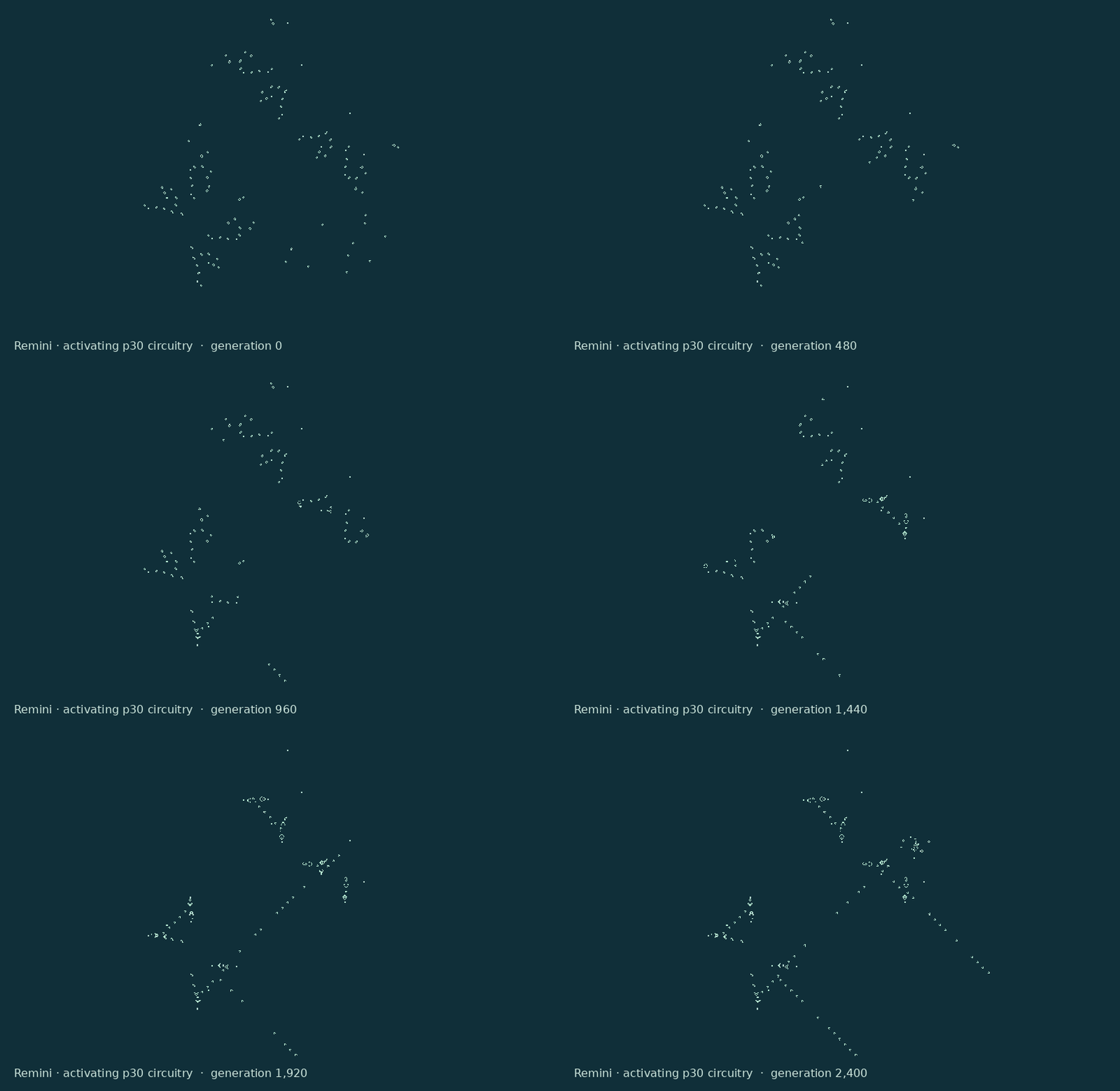
Modern self-construction from retro Life circuitry: how new understanding made an old toolkit do much more.
Simple rules, engineered spaceships, and computational discovery.
Explore the 16 articles ↓My interest in Life began with an article about Andrew Wade’s original Gemini: a pattern that constructs another copy of itself inside Conway’s simple grid. That possibility drew me into self-construction. One of my first results was Serizawa Geminoid, in another rule; I later built Geminoid Particles and carried the same construction technique into Life with Remini.
Remini combines modern single-channel construction with classic period-30 circuitry. The key realization was that p30 glider streams could supply universal construction commands: push, pull, and shoot. Caterloopillar takes another route: two moving reading heads construct one another, using still lifes and gliders to carry the instructions.
These articles follow the mechanisms and the search work needed to make the complete constructions function.
The Simkin Glider Gun grew from a search for useful catalyst interactions. LifeAPI and CatForce made those searches practical; B60 is one of the reactions they found. The smaller conduits and oscillators below are parts of the same experimental work.
Switch-engine ping-pong is a different kind of construction: carefully spaced streams turn a spaceship-and-glider exchange into continuing growth. Its 23-cell seed held the quadratic-growth population record for more than seven years.
Later experiments explore Life through printed still-life tiles, layers that encode an evolving Life step, and simulated mechanical logic. They follow the pattern discoveries and search tools in the reading order below.
Work in other rules and neural local updates has its own CA Research page.
Modern self-construction from retro Life circuitry: how new understanding made an old toolkit do much more.
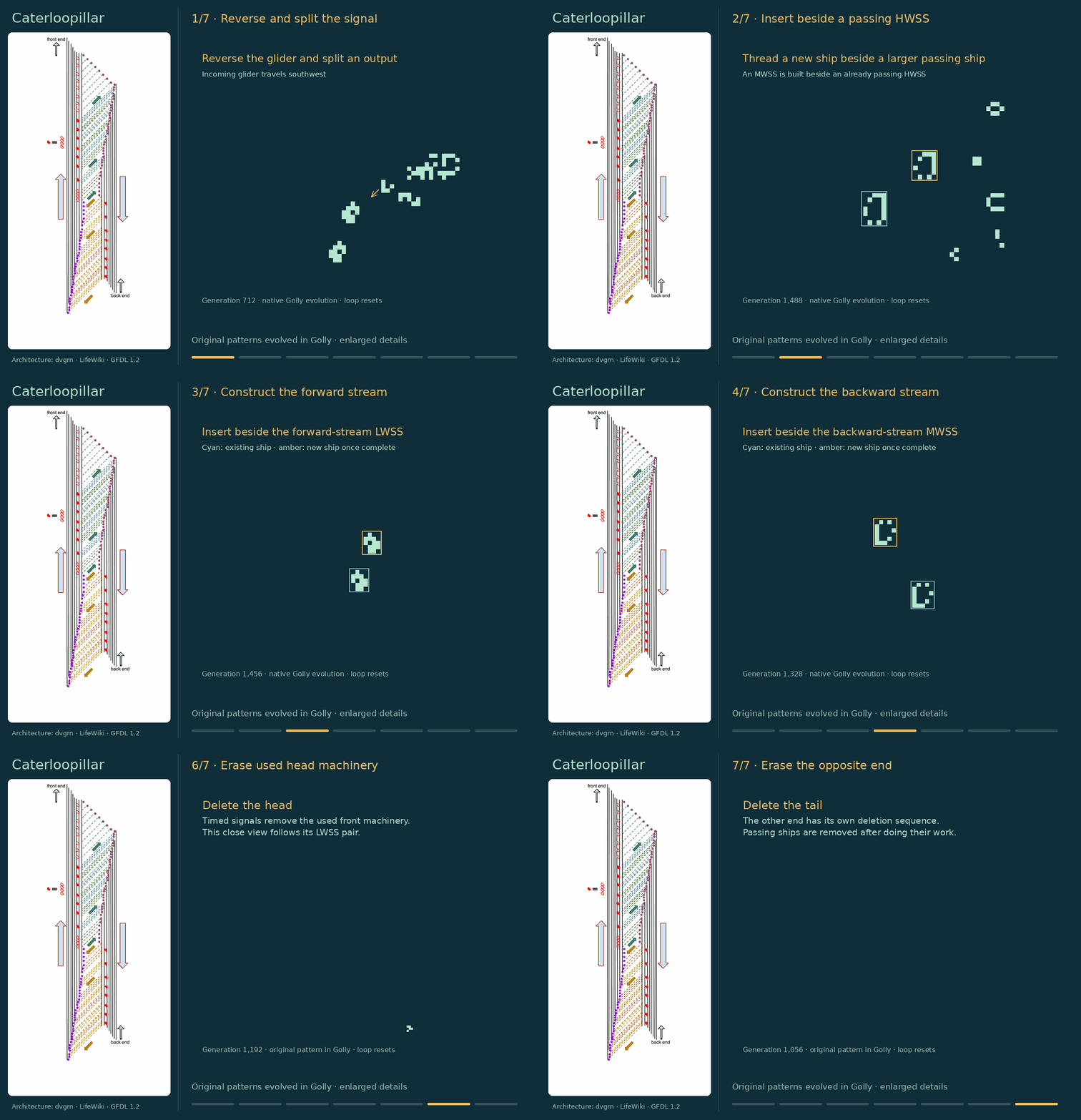
How readers, glider routing, close-spaced inserters, and deletion come together in the 2016 Pattern of the Year.
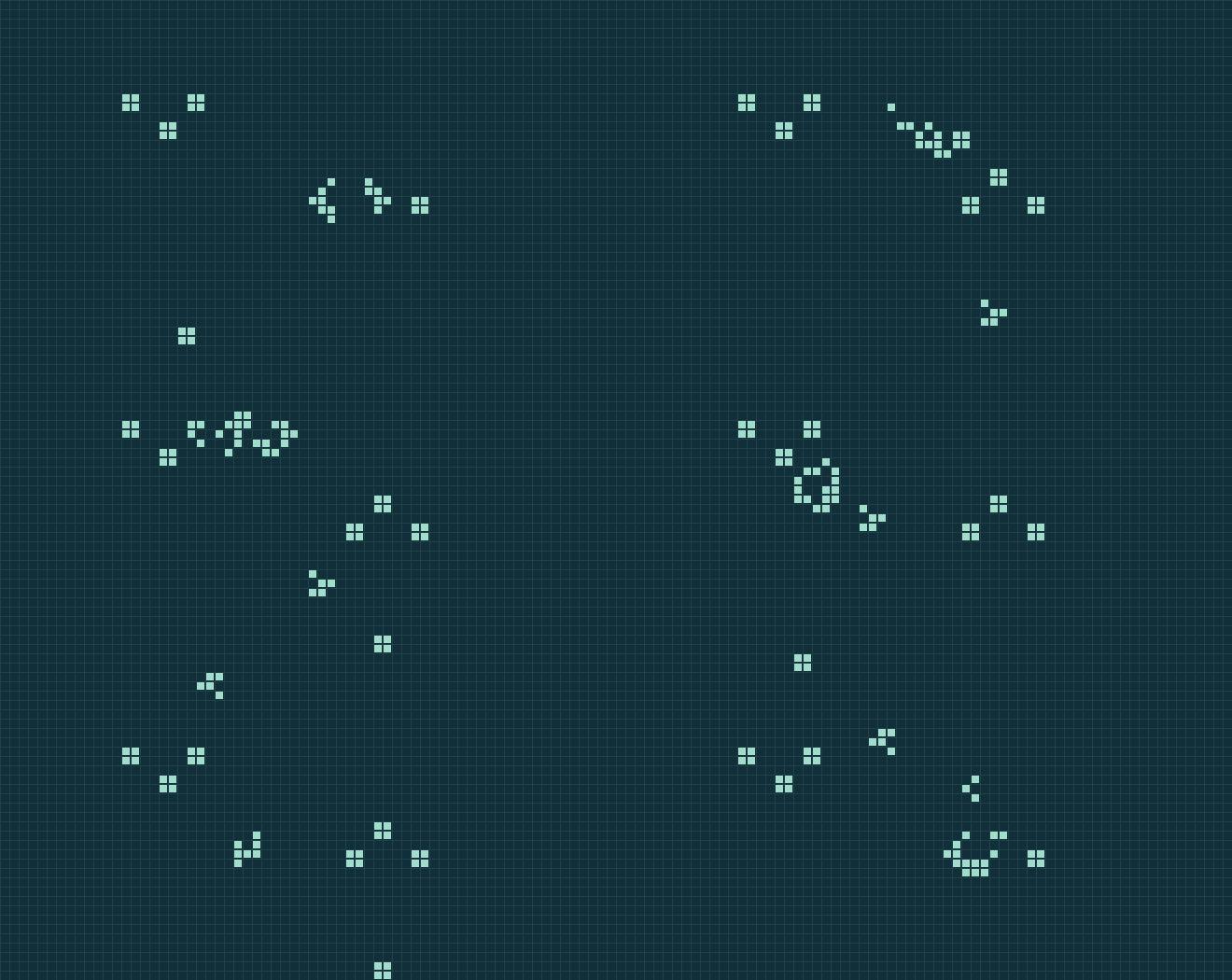
The 29-cell gun: the smallest known by live-cell population when two glider output streams are allowed.
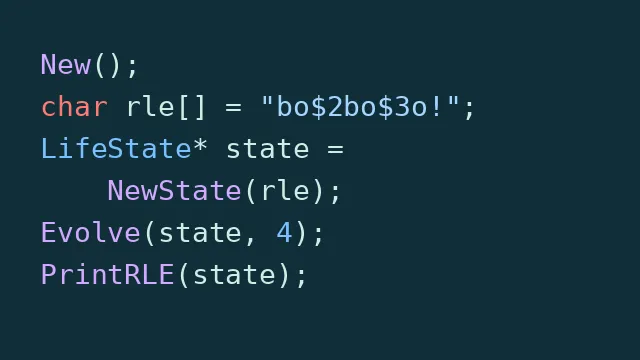
Optimized 64×64, bit-packed Game of Life evolution, with the operations needed for combinatorial searches.
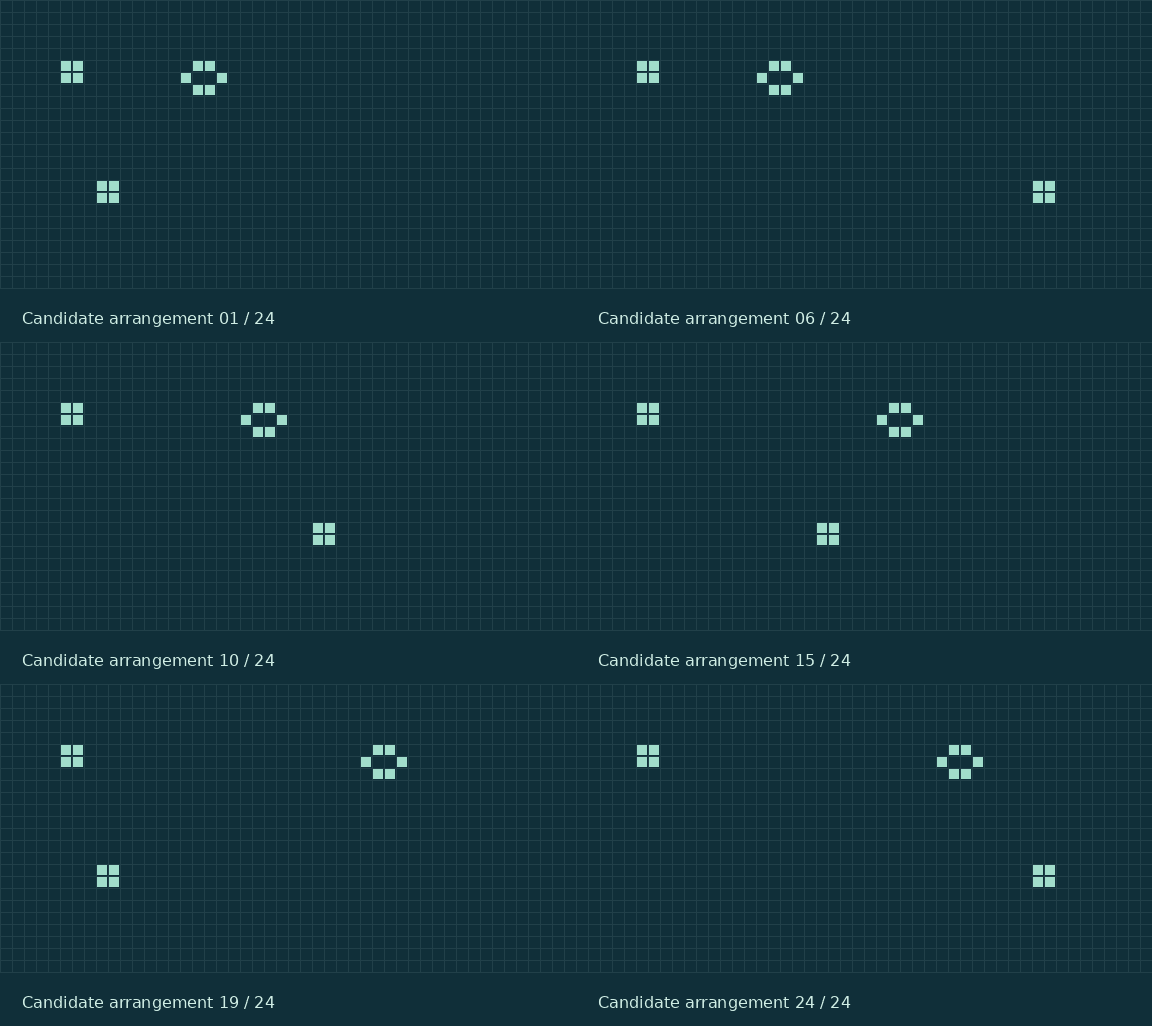
Brute-force catalyst searches that test recovery without prescribing the interaction.
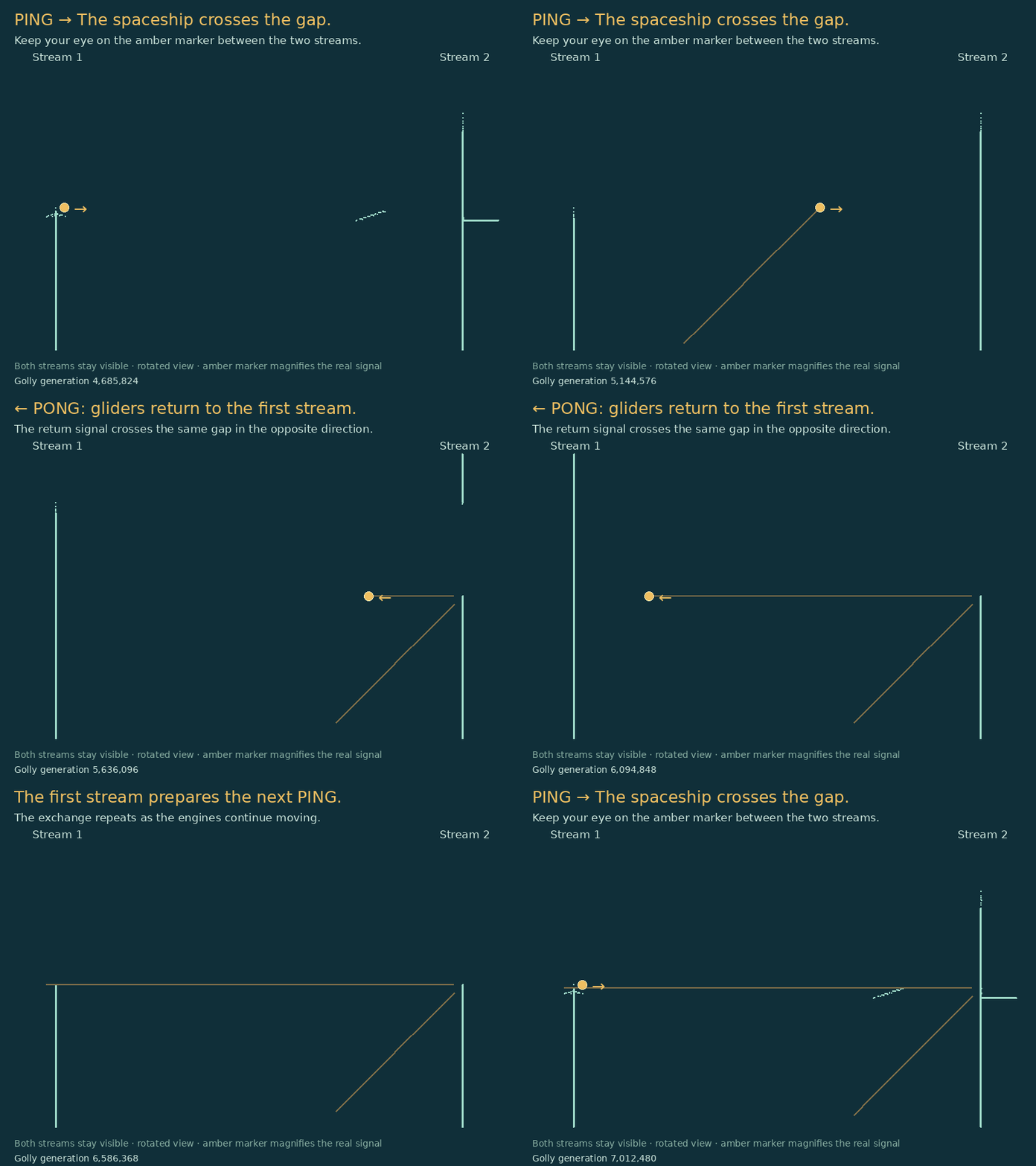
A spaceship-and-glider exchange between two switch engines, with a 23-cell record that stood for over seven years.
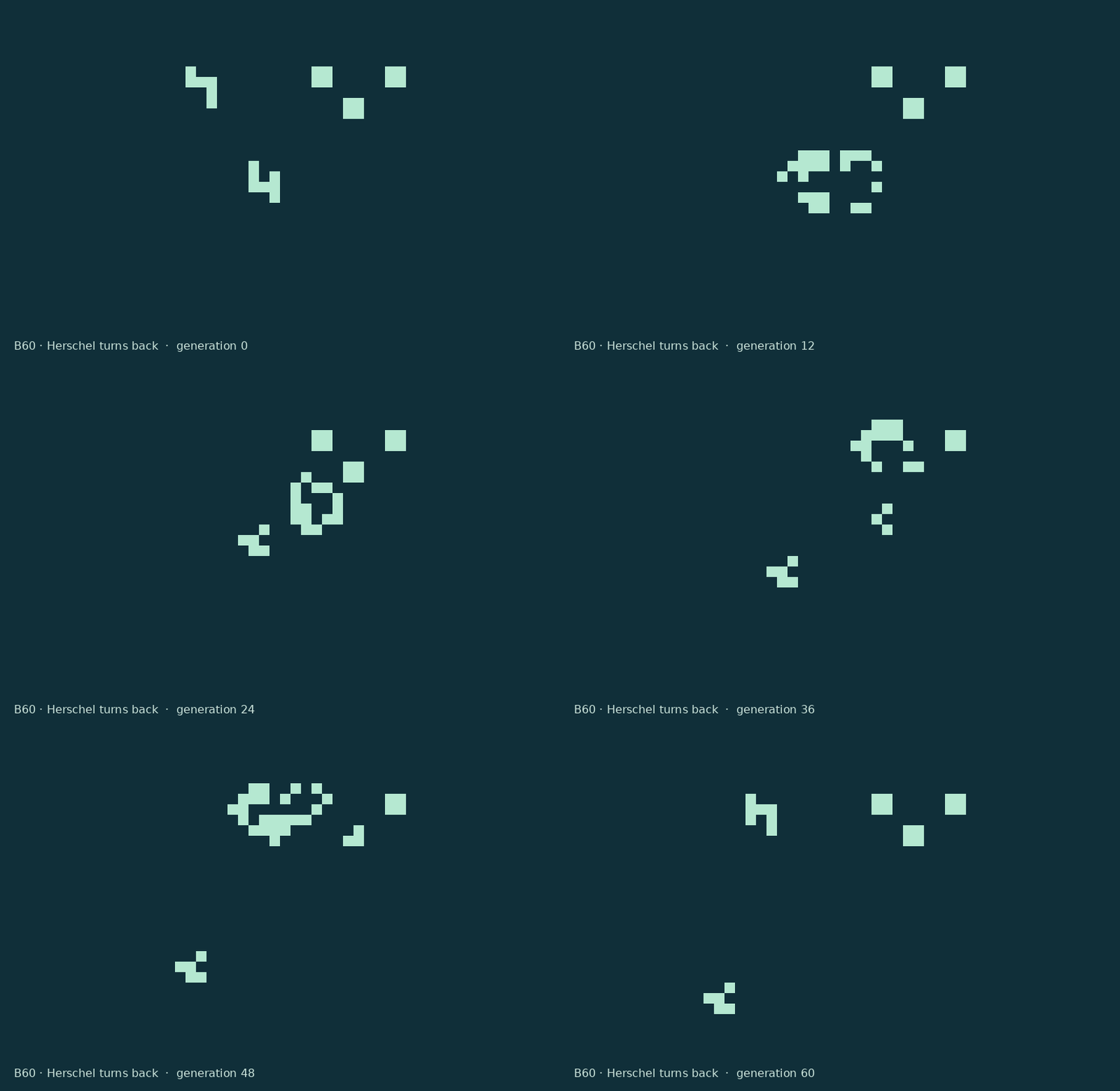
A three-block Herschel conduit found with CatForce, forming the basis of the Simkin gun.
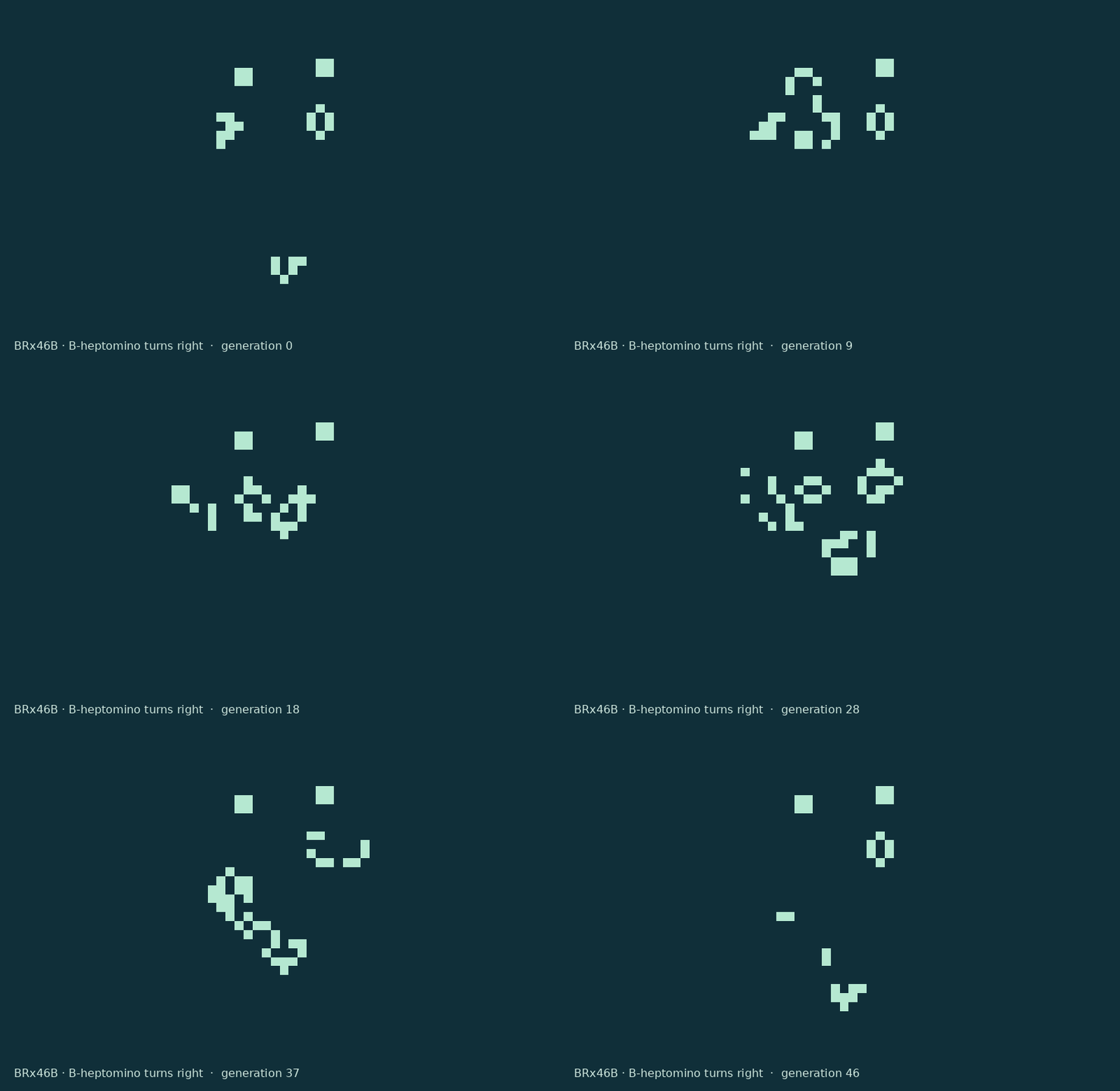
A 46-generation conduit that carries a B-heptomino directly to another B-heptomino.
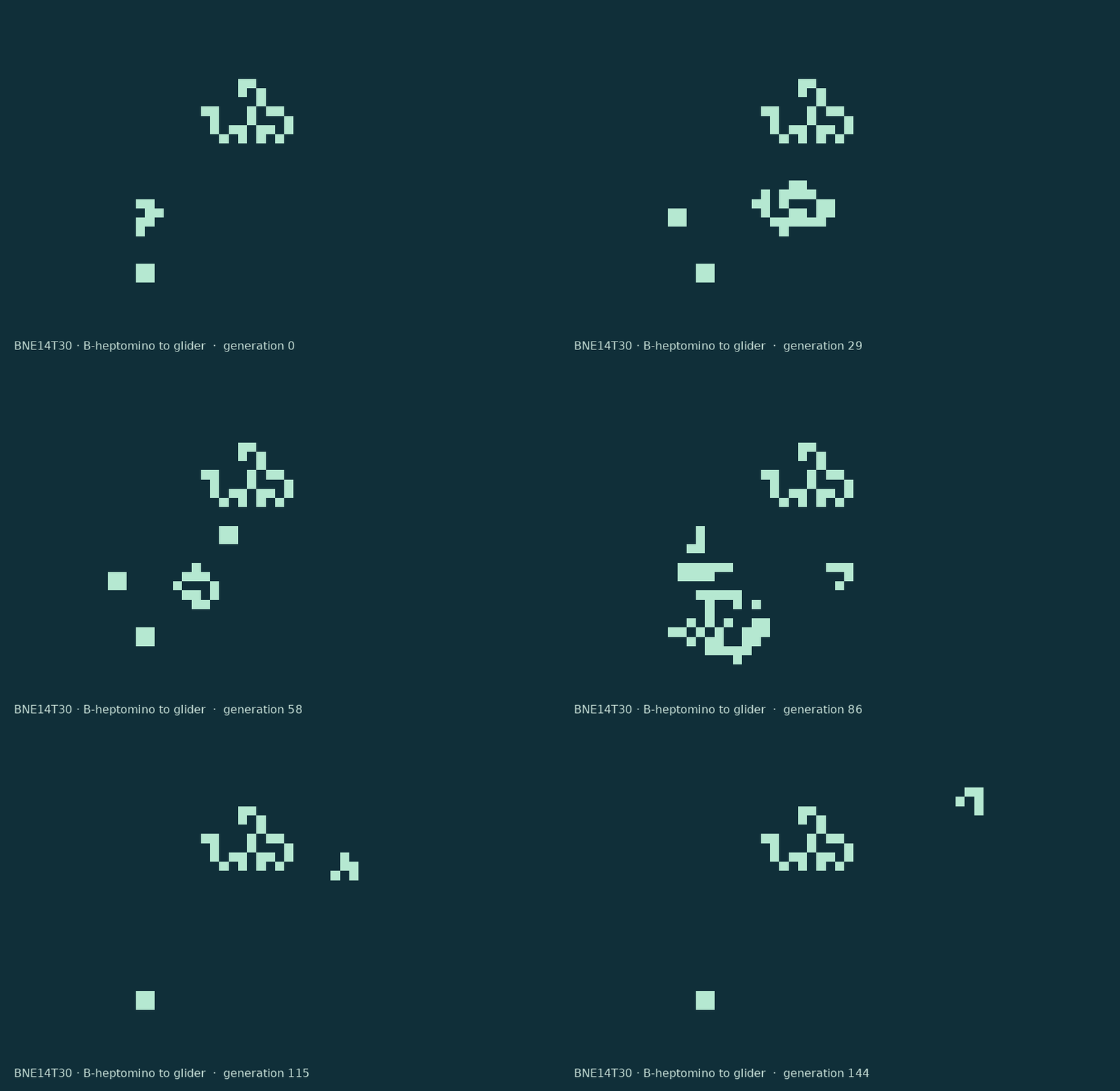
Tanner Jacobi’s edge shooter, developed from a Bellman result I found earlier in 2015.
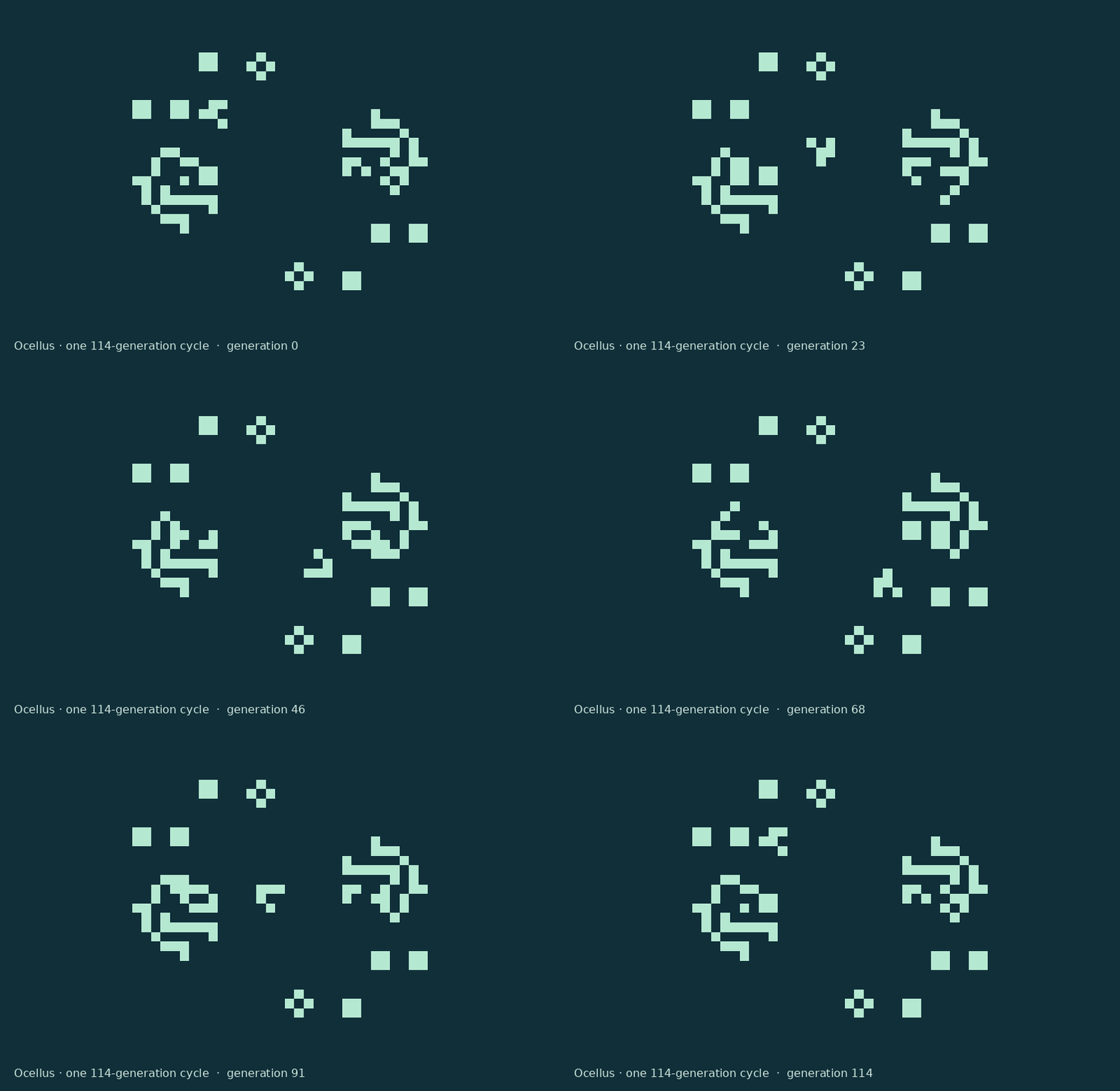
A period-114 relay oscillator built around a reduced 180-degree reflector.
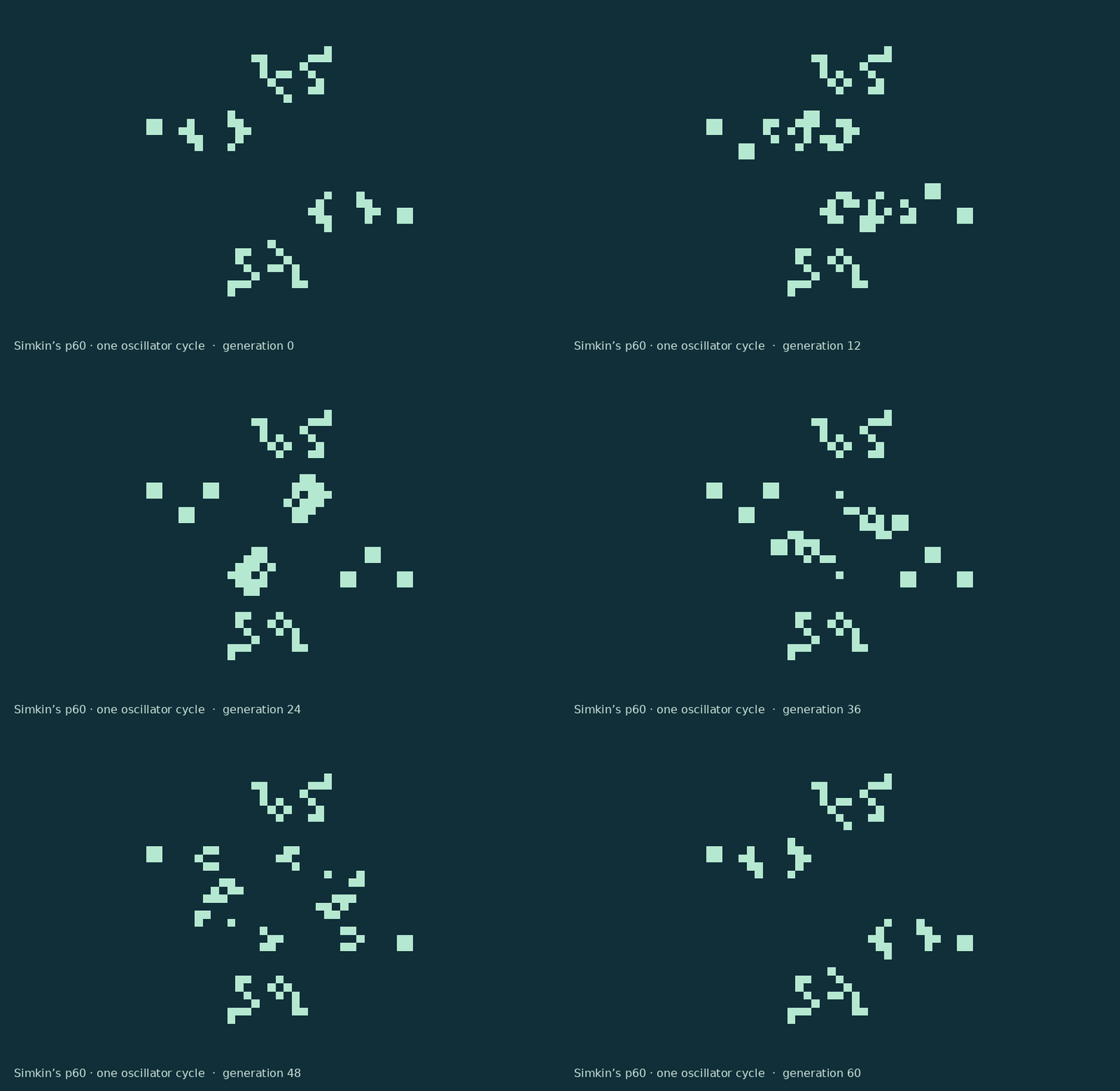
A period-60 oscillator formed from two B60 conduits with glider-suppressing eaters.
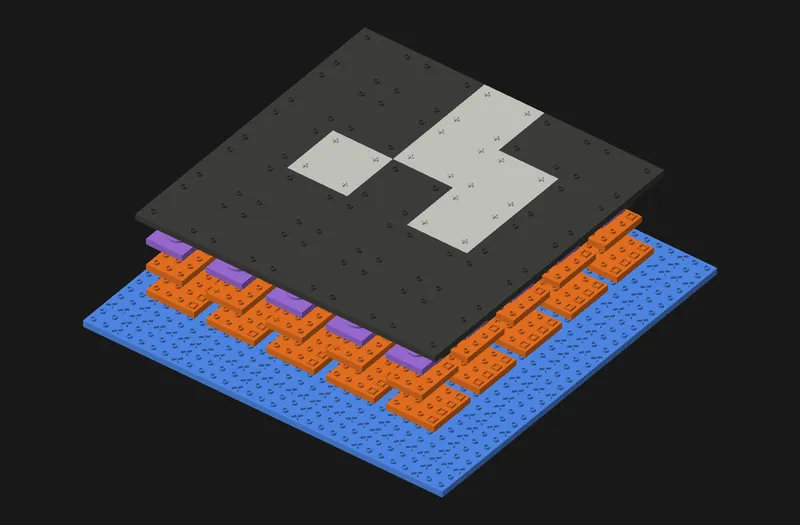
Make a Life generation by assembling coloured pieces: six blue, eight orange, eight purple, and four black/white tile types, with illustrated inputs, outputs, and a compact 3D tile set.
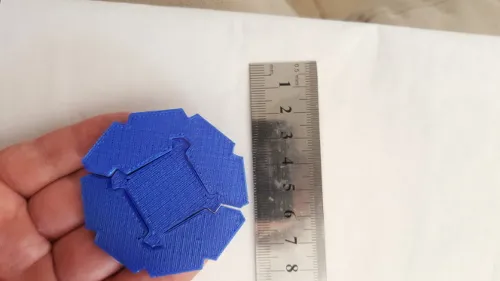
Printable puzzle pieces whose connections encode Life’s stability constraints, developed with Paul Callahan and Adam Goucher.
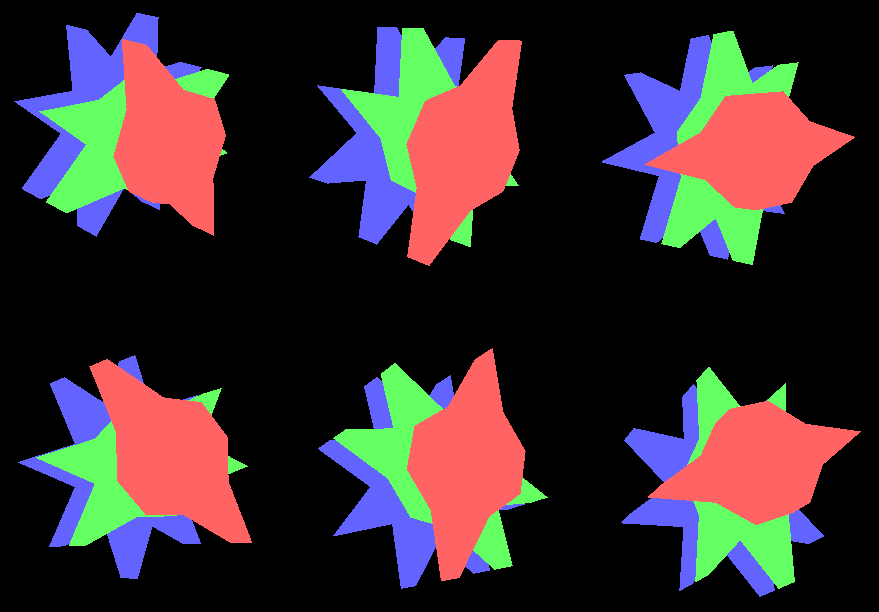
A simulation of layered, selectively toothed gears as a representation of logic.
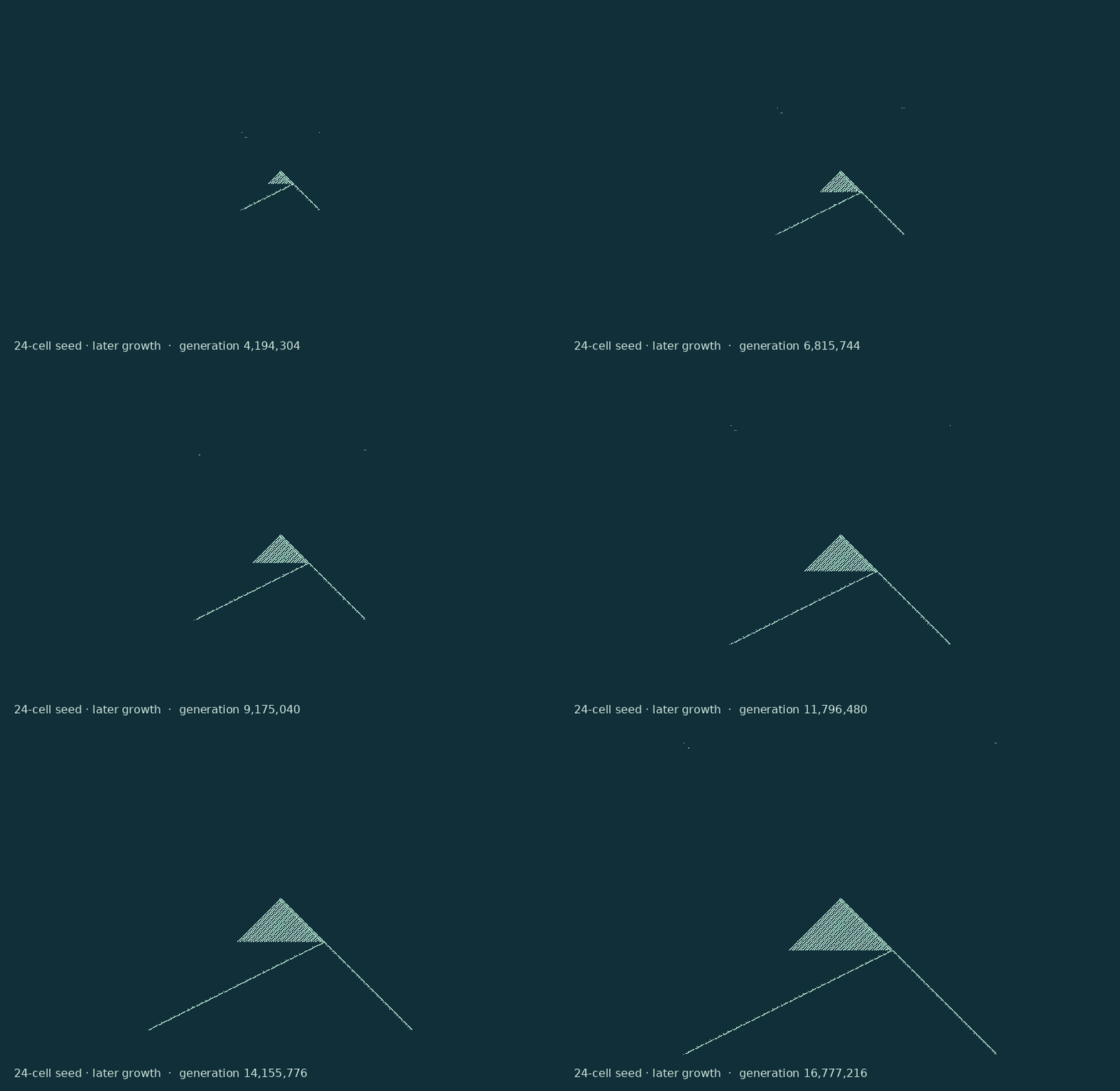
A 24-cell breeder discovered between the 25-cell seed and switch engine ping-pong.
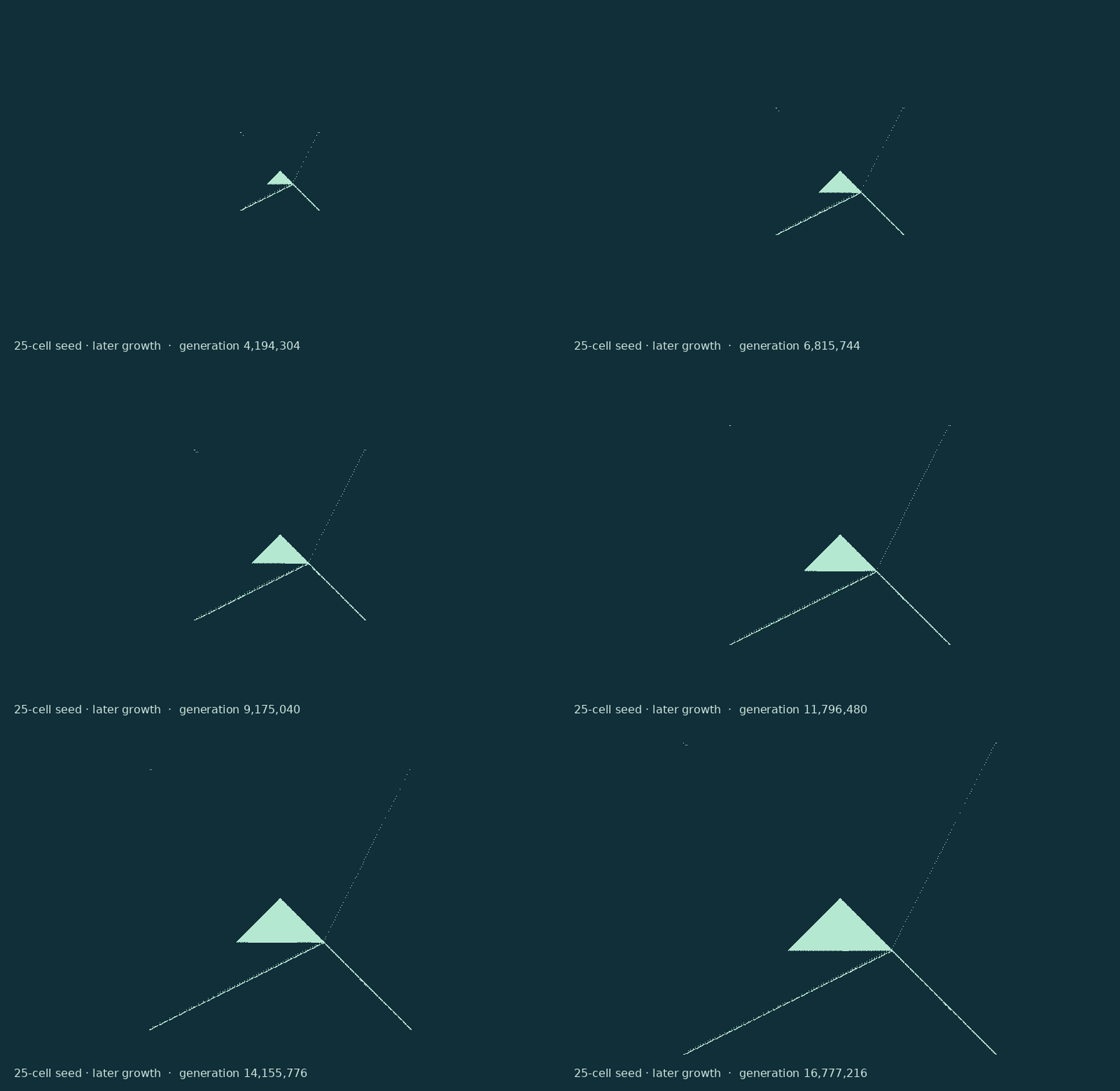
The first of three progressively smaller quadratic-growth seeds I found in October 2014.