ResearchExperiment
Conway’s Life in 3D Tiles
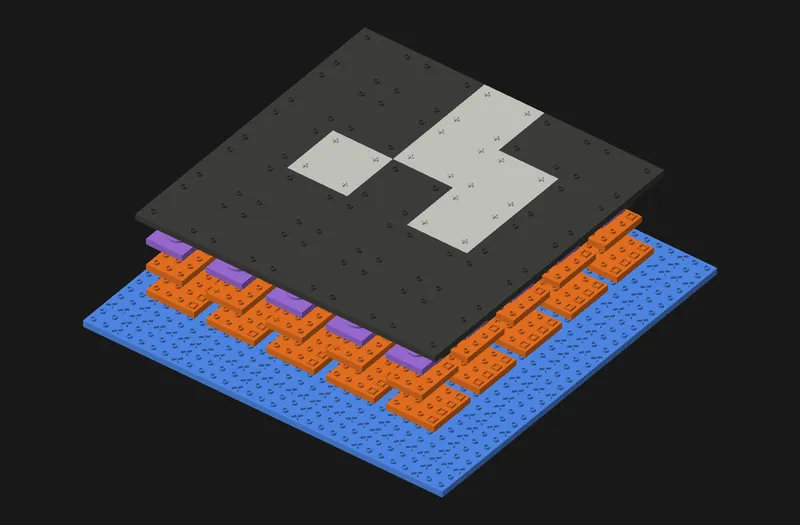
Make a Life generation by assembling coloured pieces: six blue, eight orange, eight purple, and four black/white tile types, with illustrated inputs, outputs, and a compact 3D tile set.
Mathematical questions and Game of Life discoveries, with a clear distinction between demonstrated patterns and candidate claims.
19 articles from the shared collectionMake a Life generation by assembling coloured pieces: six blue, eight orange, eight purple, and four black/white tile types, with illustrated inputs, outputs, and a compact 3D tile set.
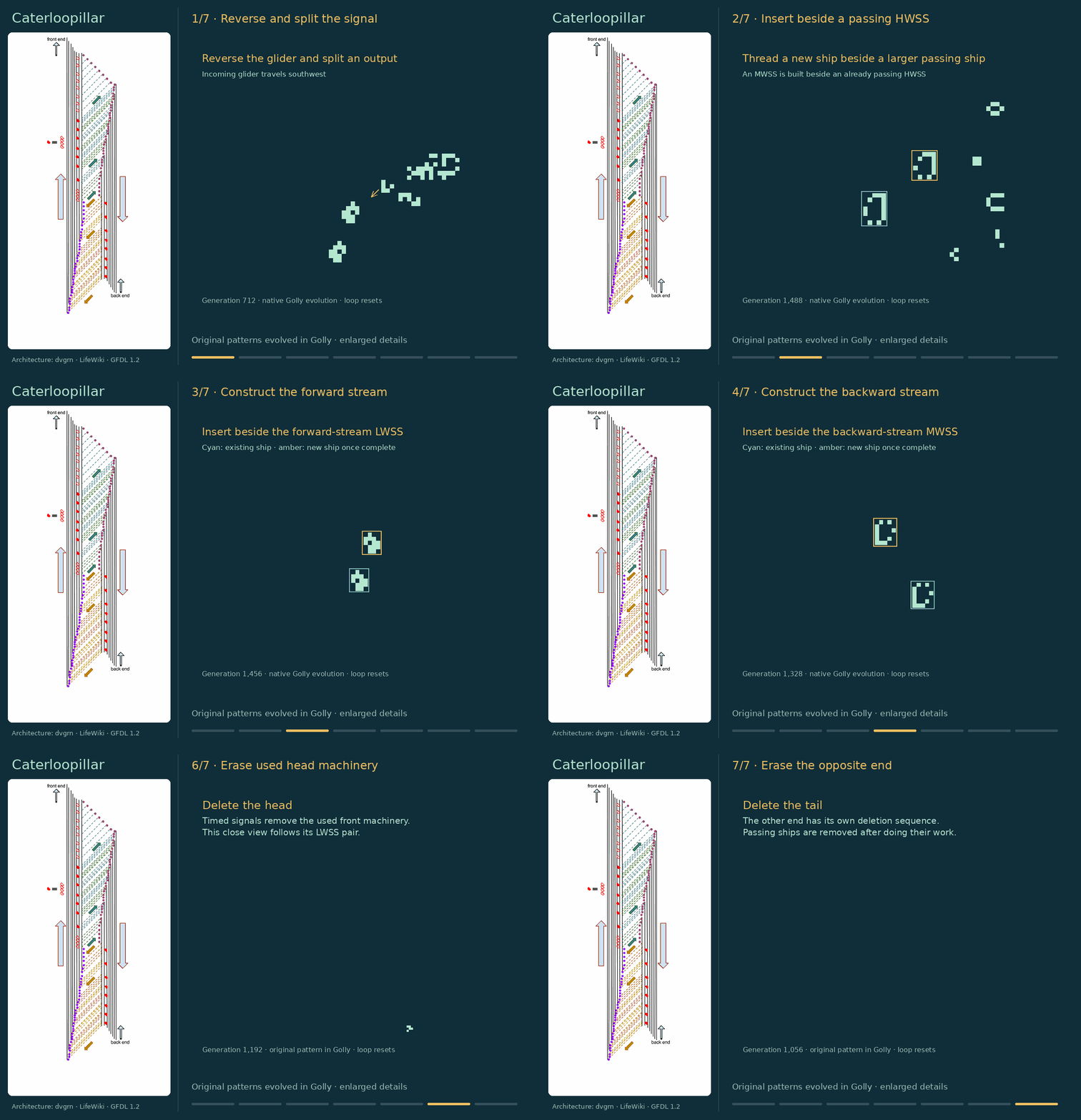
How readers, glider routing, close-spaced inserters, and deletion come together in the 2016 Pattern of the Year.
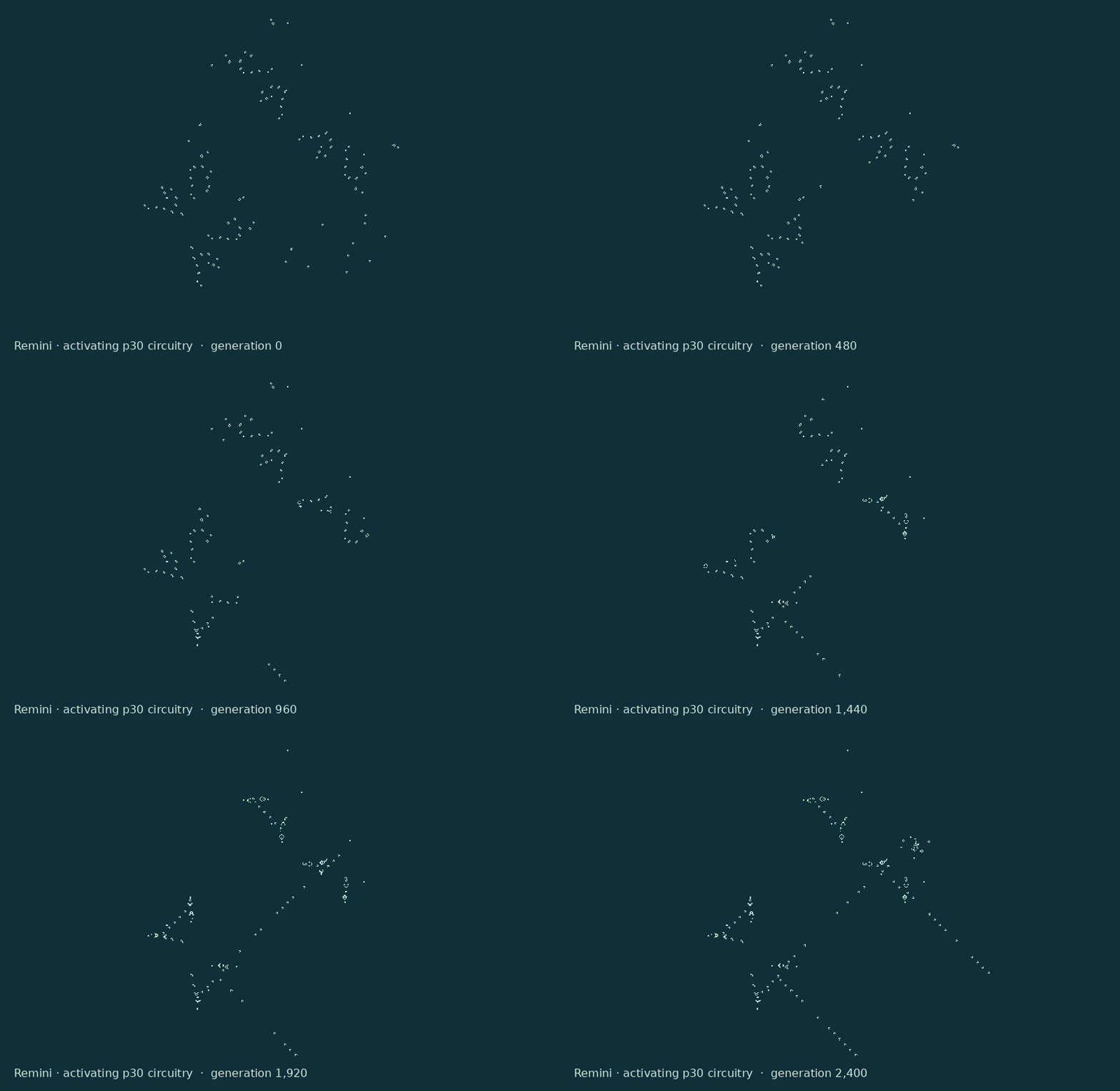
Modern self-construction from retro Life circuitry: how new understanding made an old toolkit do much more.
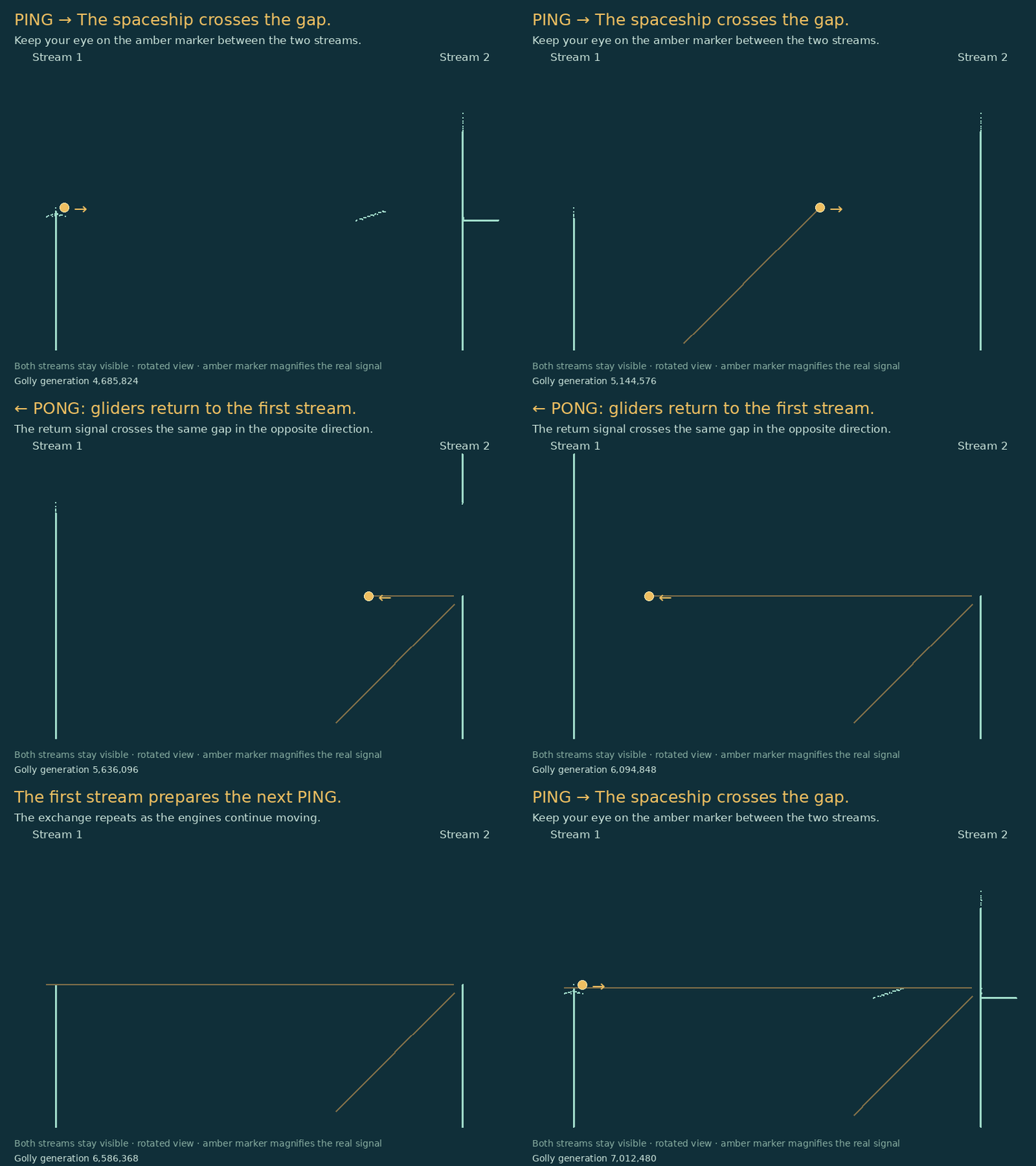
A spaceship-and-glider exchange between two switch engines, with a 23-cell record that stood for over seven years.
From a simple question and an AI-directed search to a collaborative preprint on lattice packing in every sufficiently large dimension.
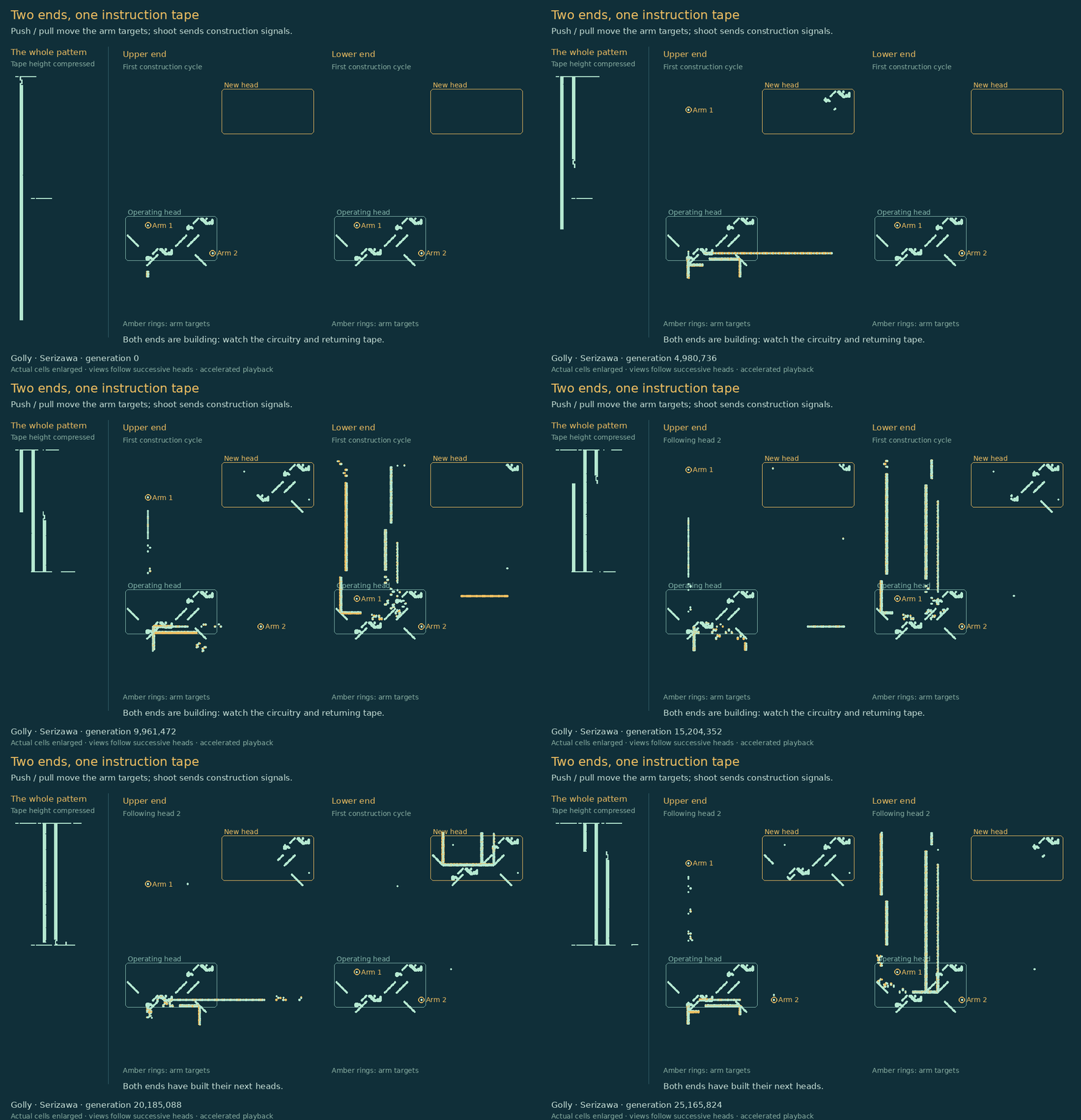
One of my first construction results: a smaller, more efficient Geminoid design in Serizawa, following my interest in Andrew Wade’s Gemini.
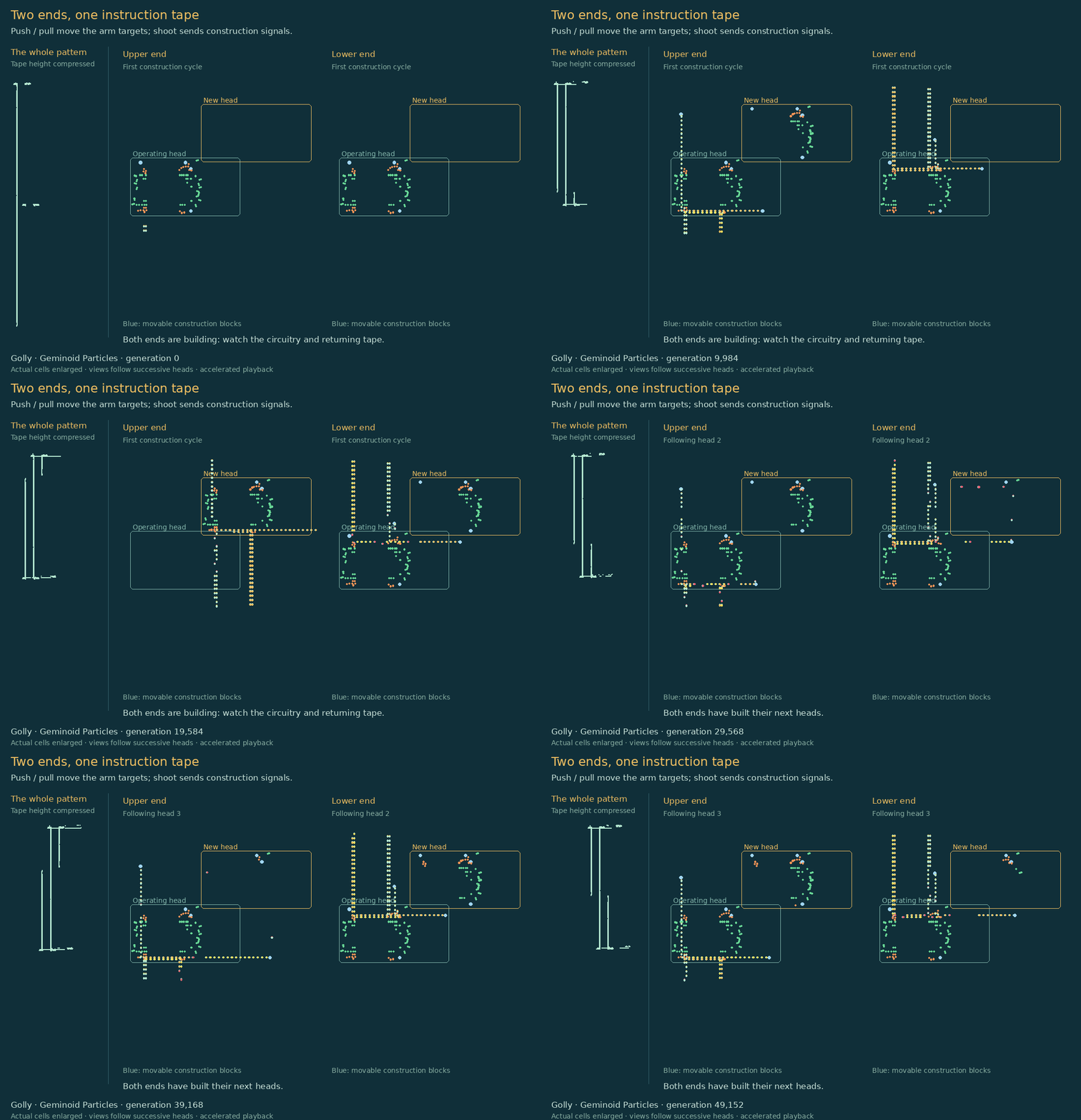
A custom nine-state cellular automaton for exploring construction and self-destruction.
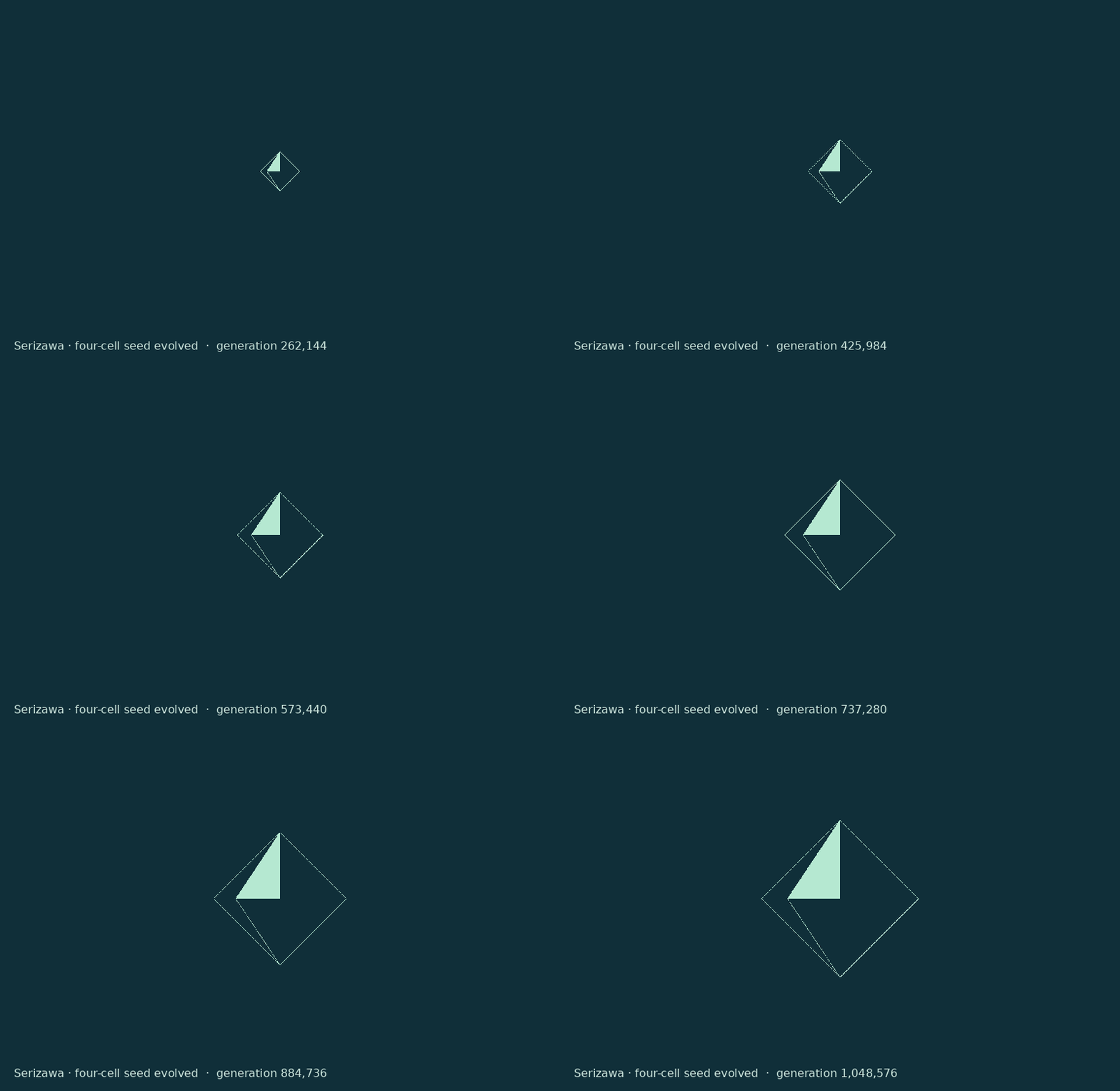
Five-cell and later four-cell seeds with quadratic growth, posted in June 2014.
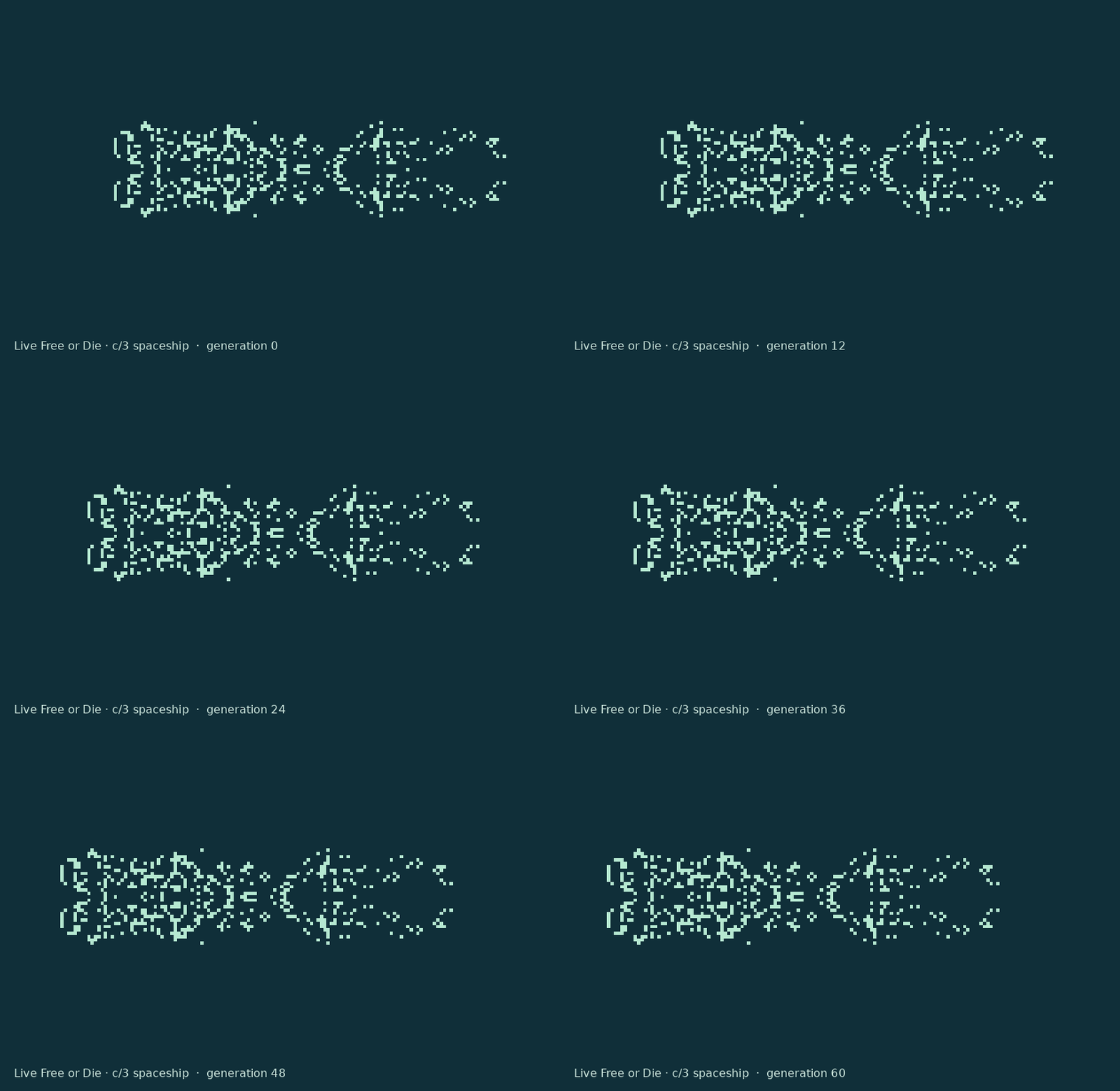
A prize-winning period-six spaceship at a previously undiscovered speed in B2/S0.
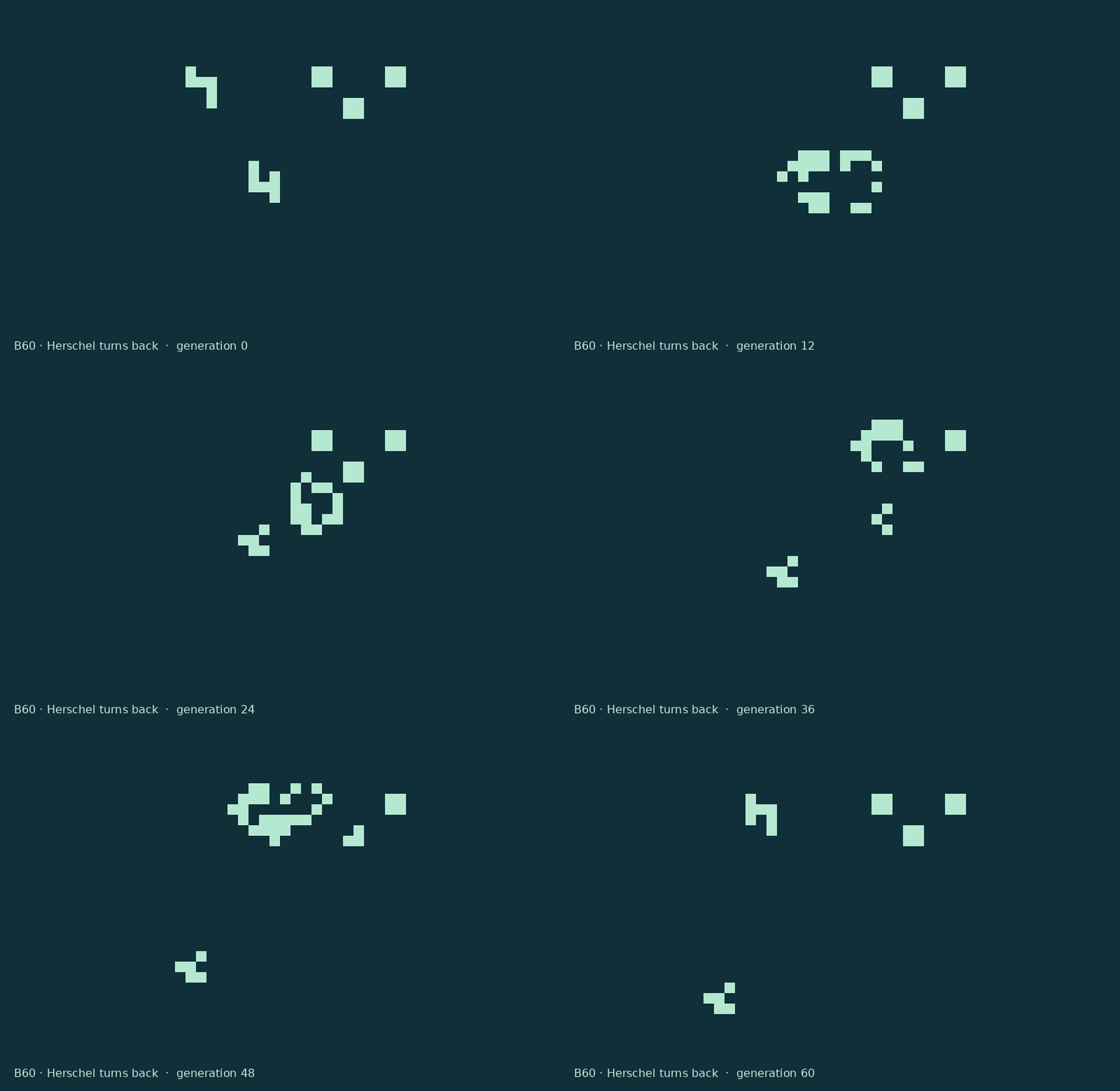
A three-block Herschel conduit found with CatForce, forming the basis of the Simkin gun.
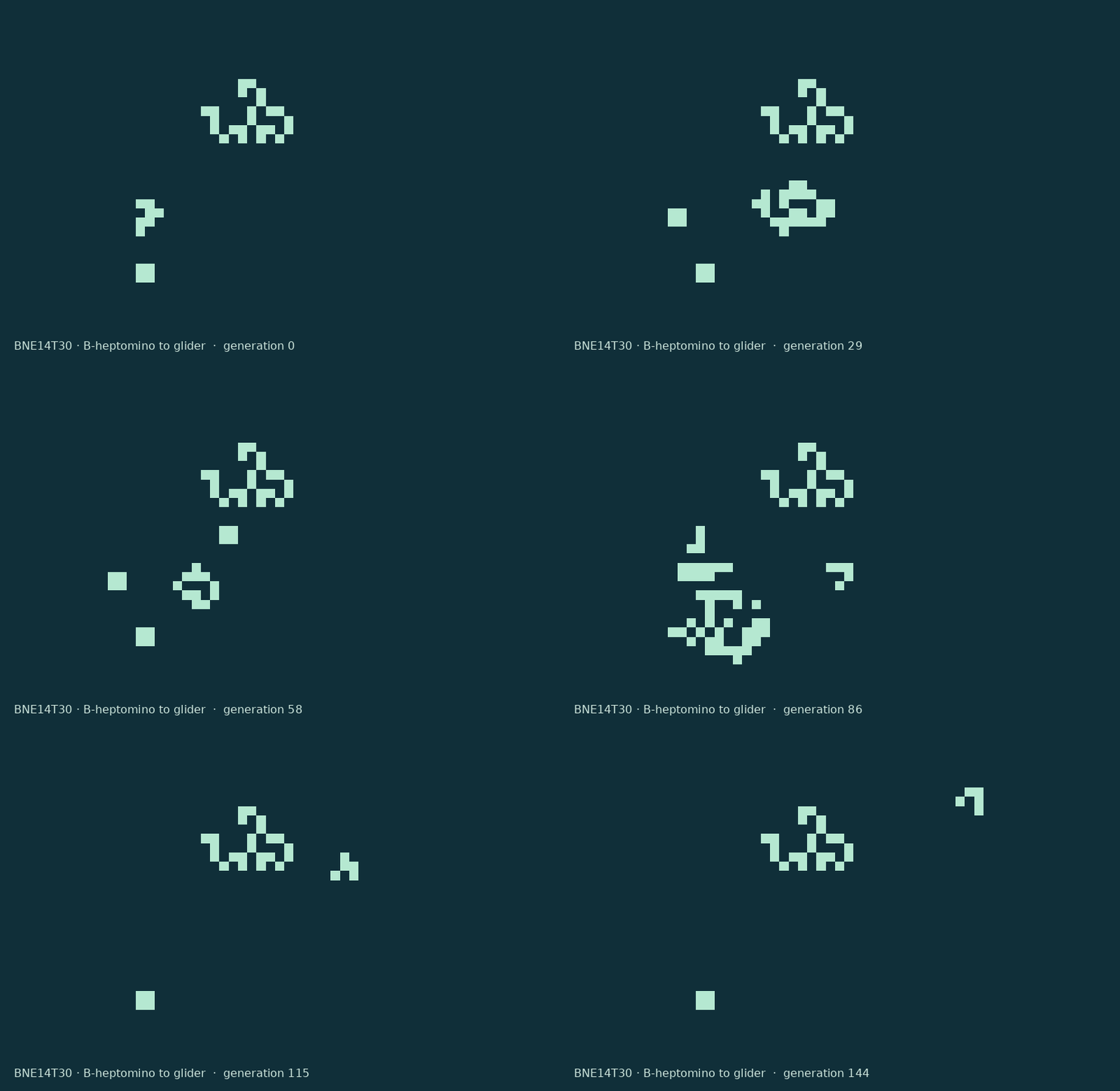
Tanner Jacobi’s edge shooter, developed from a Bellman result I found earlier in 2015.
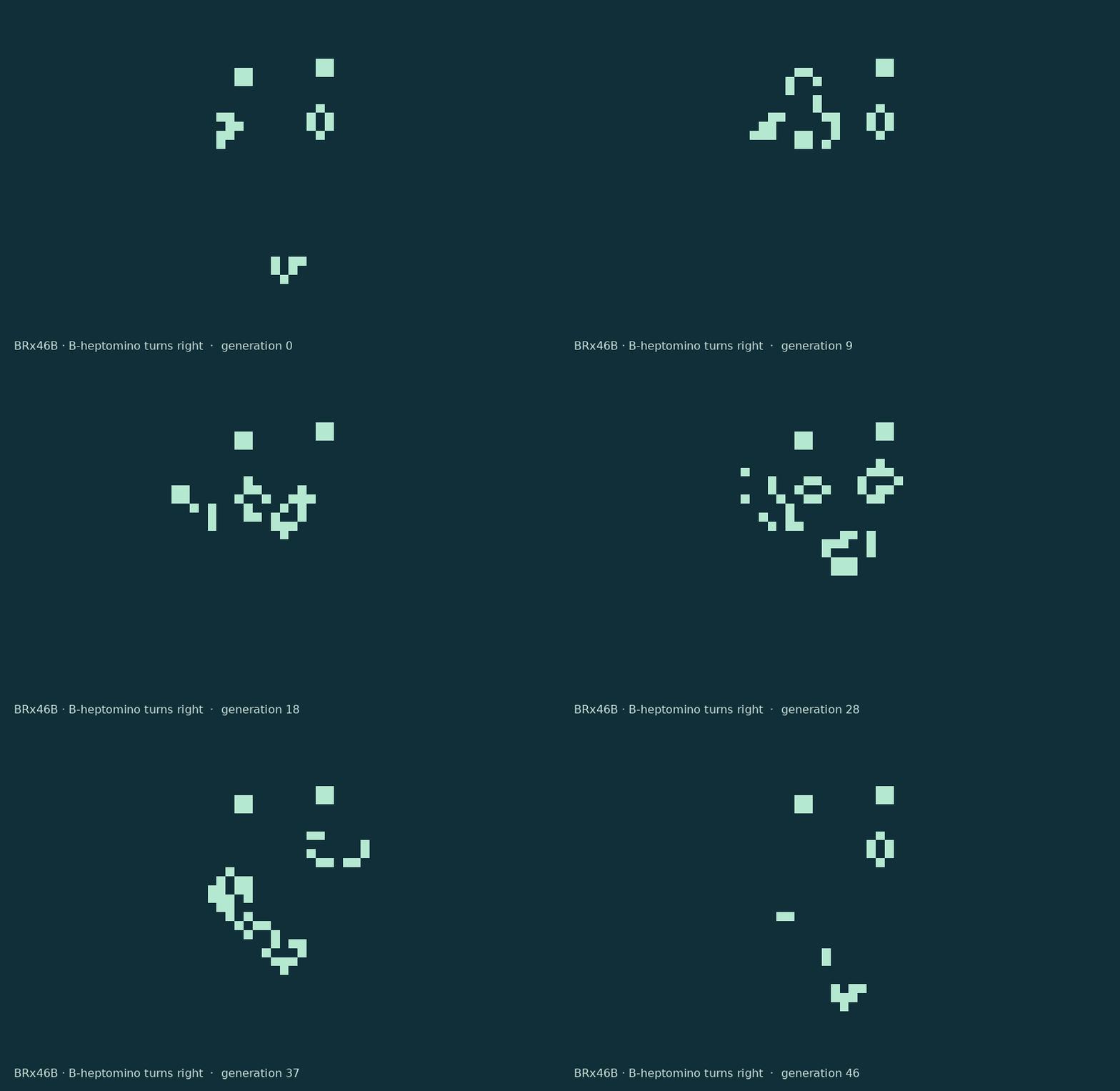
A 46-generation conduit that carries a B-heptomino directly to another B-heptomino.
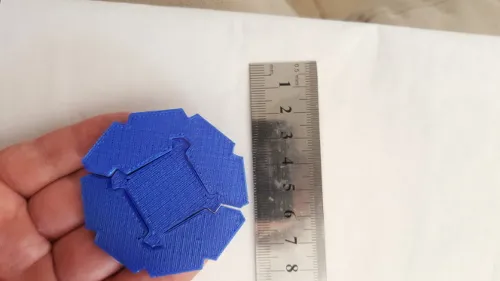
Printable puzzle pieces whose connections encode Life’s stability constraints, developed with Paul Callahan and Adam Goucher.
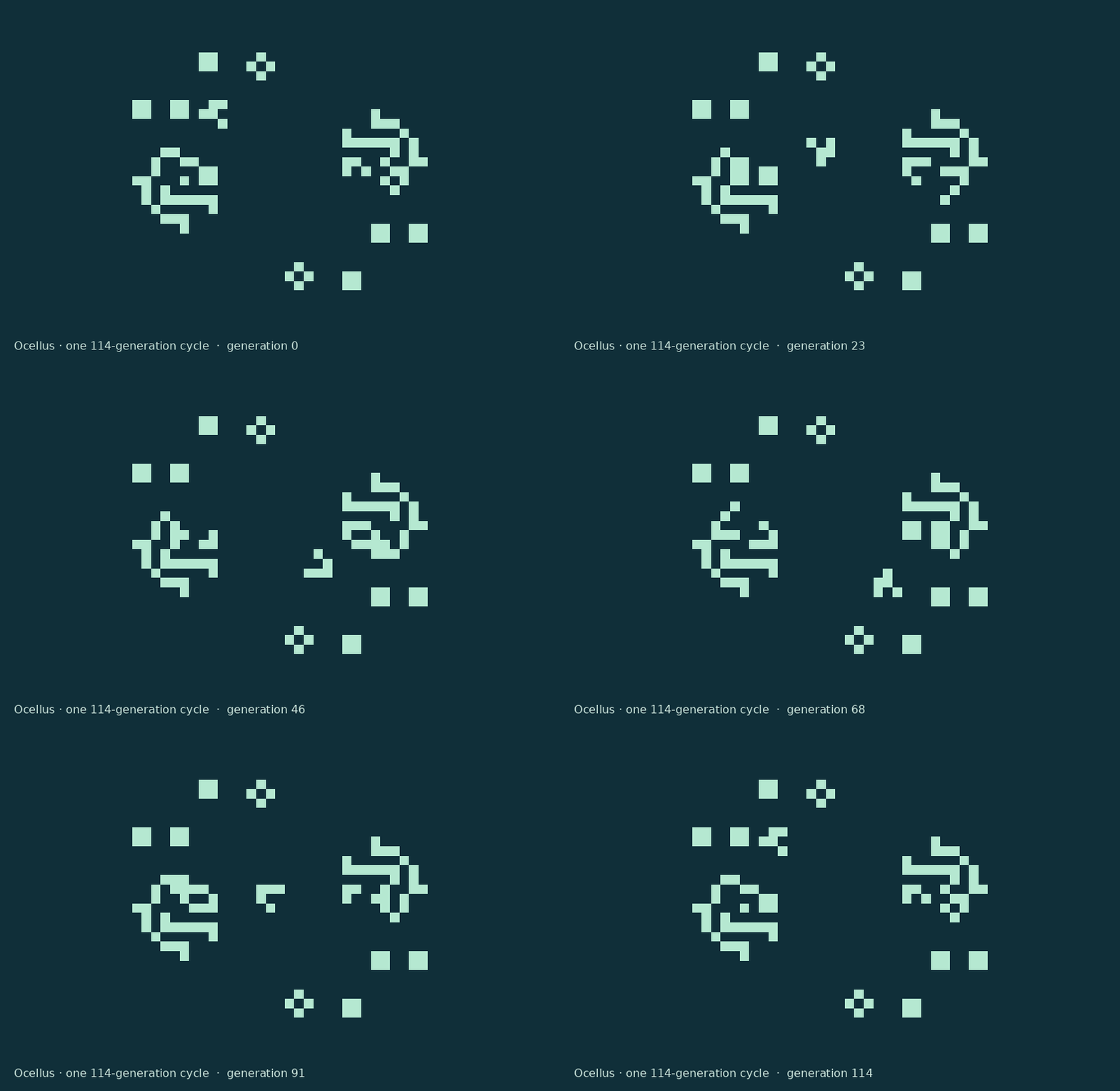
A period-114 relay oscillator built around a reduced 180-degree reflector.
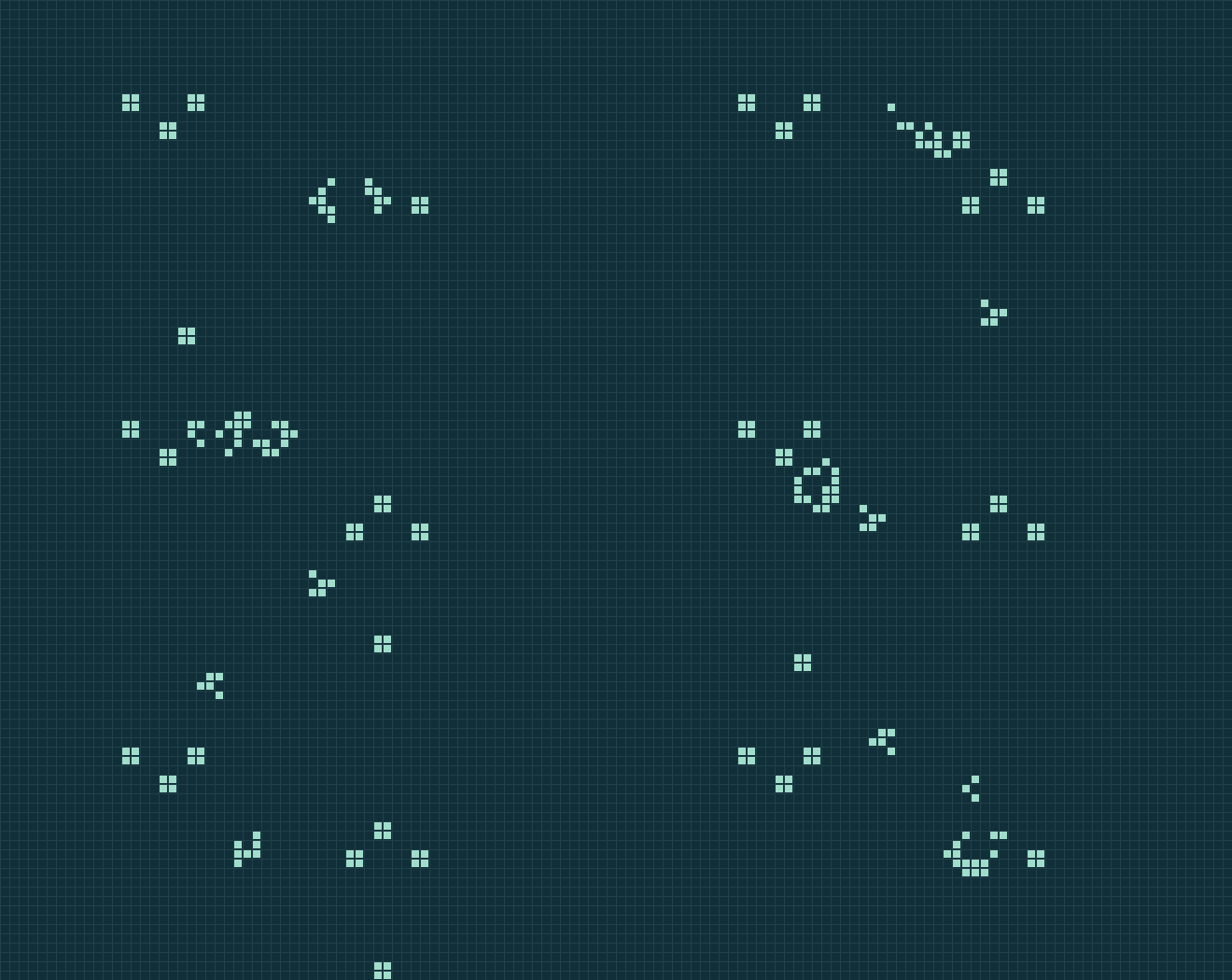
The 29-cell gun: the smallest known by live-cell population when two glider output streams are allowed.
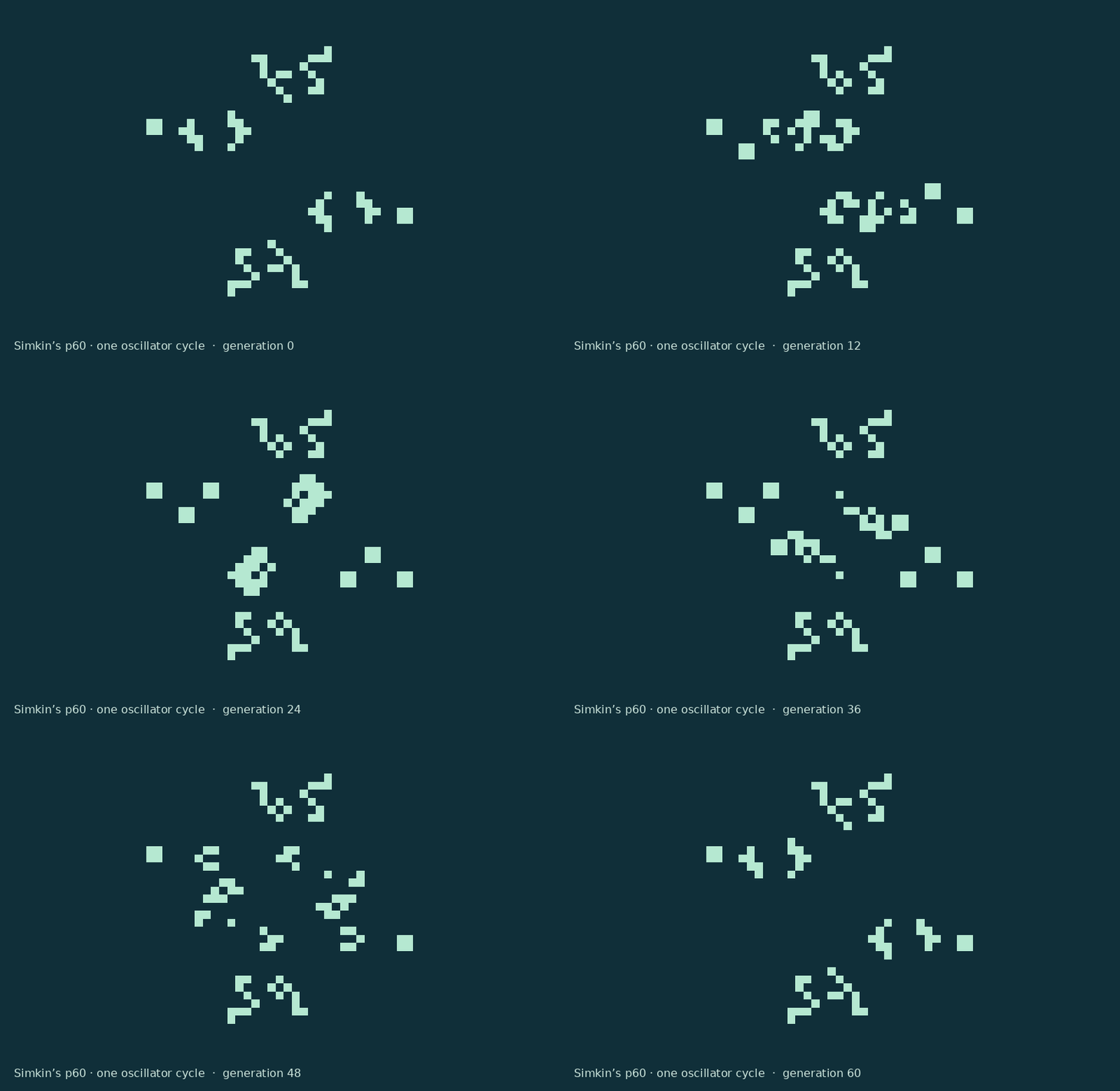
A period-60 oscillator formed from two B60 conduits with glider-suppressing eaters.
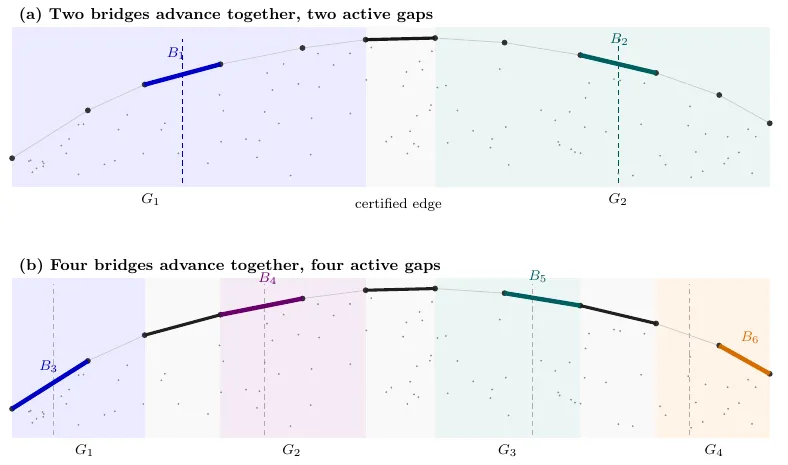
Batched bridge searches for read-only point sets: a current manuscript developing a methodology I recall working on around 2009.
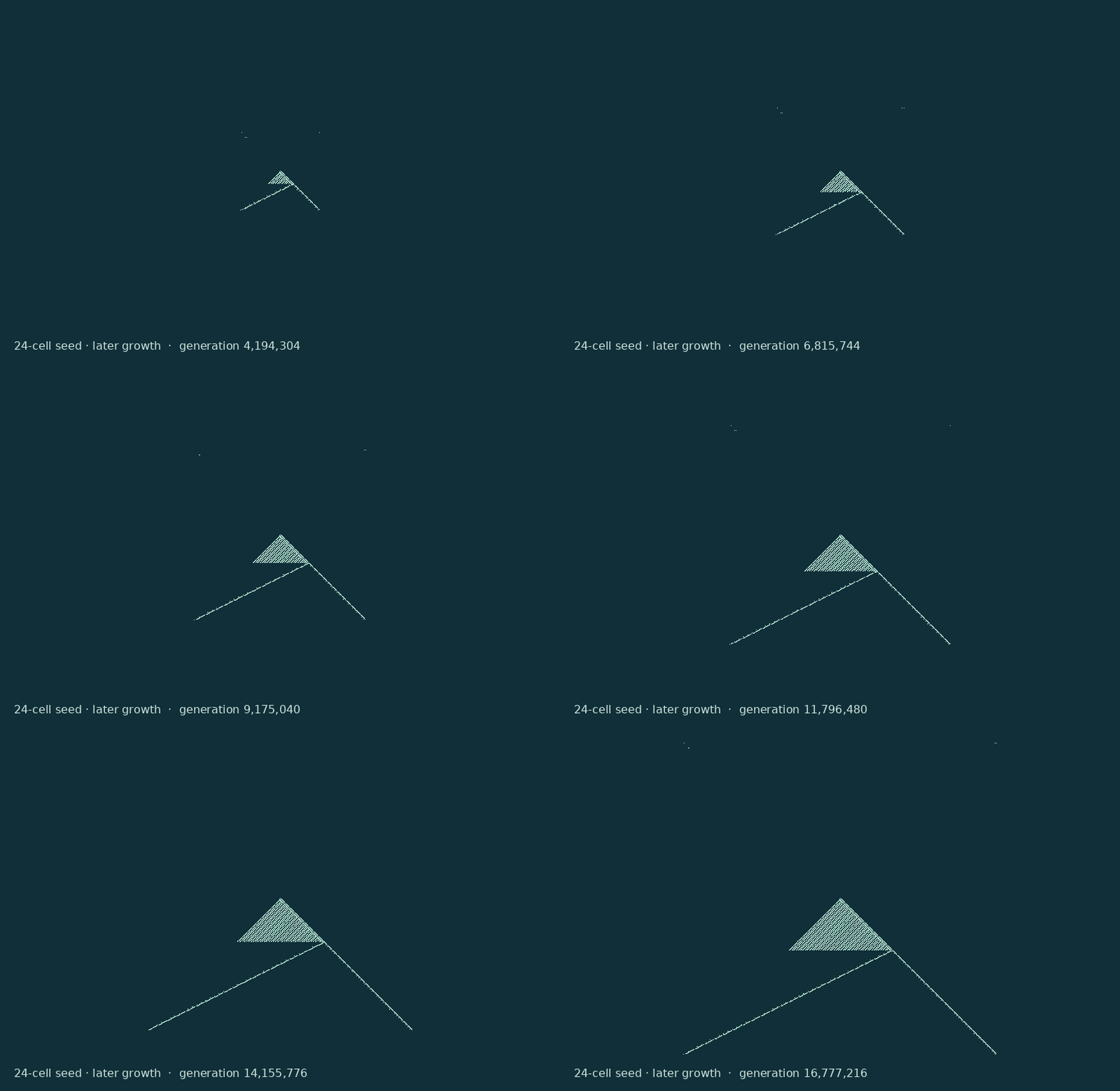
A 24-cell breeder discovered between the 25-cell seed and switch engine ping-pong.
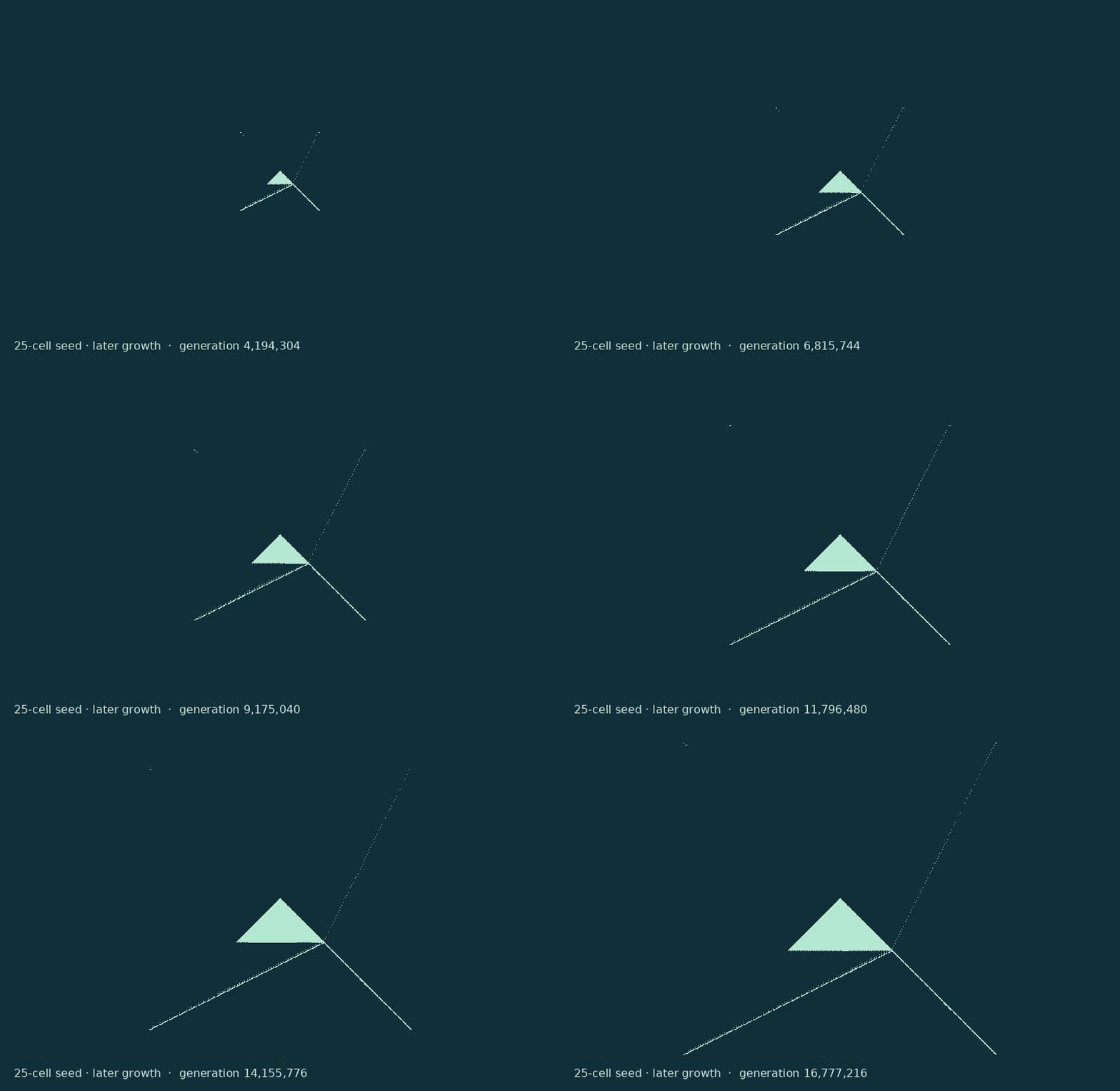
The first of three progressively smaller quadratic-growth seeds I found in October 2014.