A rule enforced by the pieces
Paul Callahan’s still-life tiles were an inspiration for my interest in physical Conway’s Life mechanisms. If the pieces fit together according to their constraints, the represented pattern must be stable.
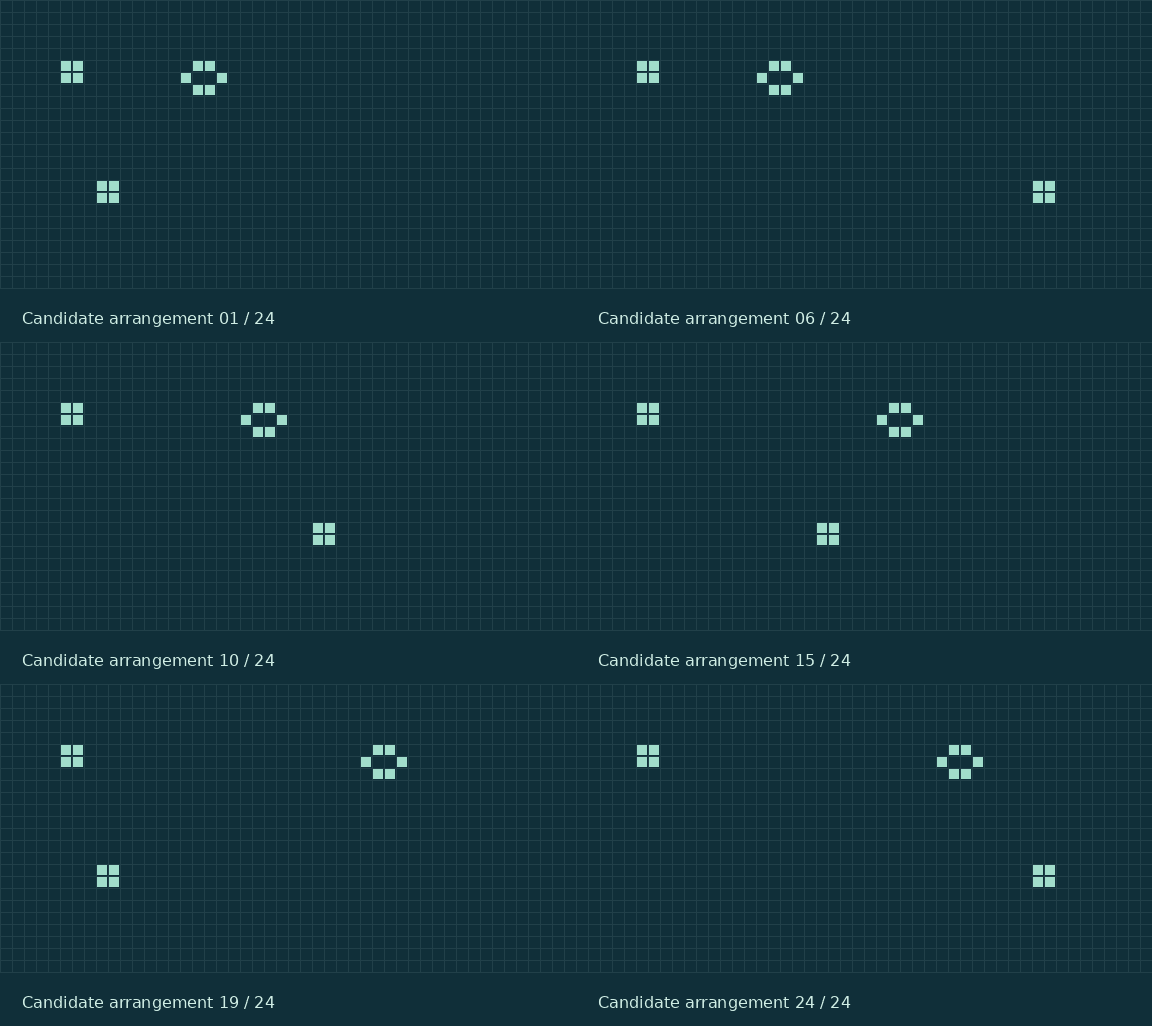
A still life has no changing cells. Every live cell must have two or three live neighbours, and every dead cell must have a neighbour count other than three. The puzzle turns these local conditions into compatible and incompatible connections. Finding a valid assembly becomes a way to work with the rule by hand.
My contribution
Callahan introduced the planar tiling problem in May 2016, and Adam Goucher contributed a tile design. My work focused on printable models and practical assembly, including grooves and connections for the empty-cell pieces. The design was a collaboration; I did not originate the whole tile system.
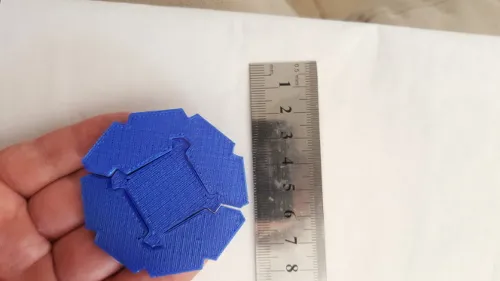
In May I shared printable files and discussed attachment, fragility, and symmetry. On June 3, I reported my first working prints, with qualifications about their fit. I then discussed changes to their height and size. These were actual printing experiments, rather than just illustrations of a possible puzzle.
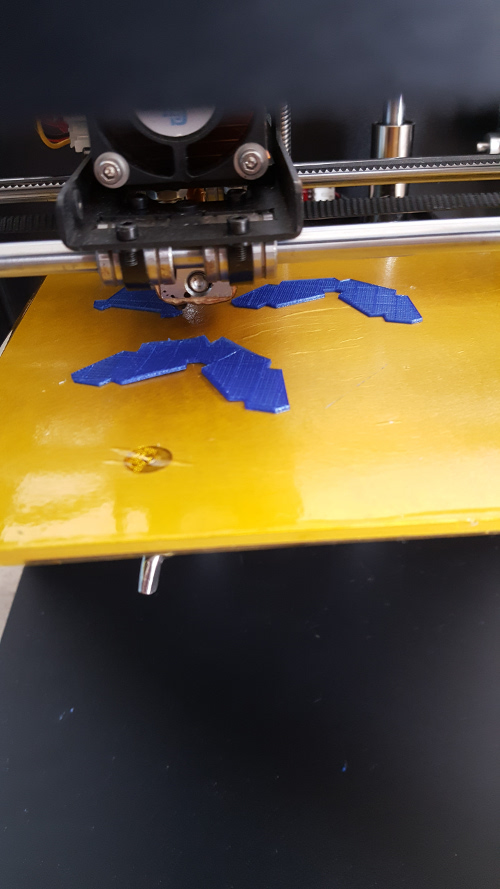
My photograph from the June 3, 2016 print report. The cover photograph shows the printed pieces beside a ruler.
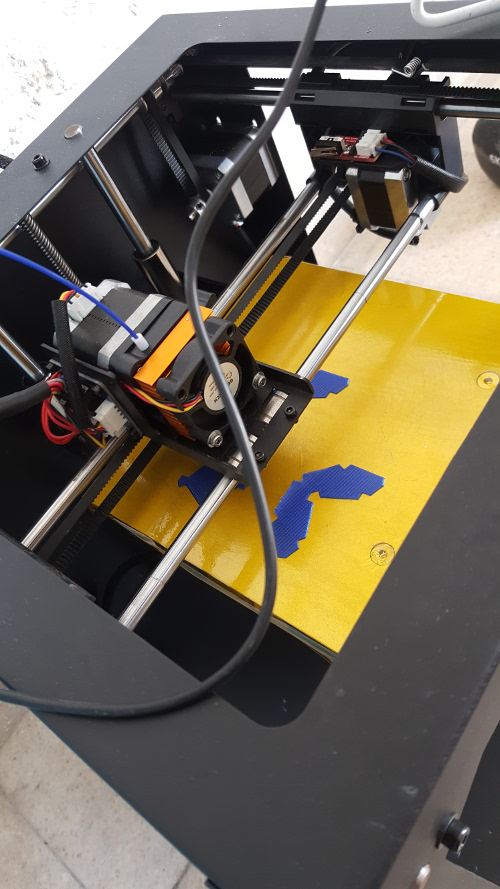
The same printing session, from another angle.
Geometry has to work in your hands
The mathematical constraint and the physical connection solve different problems. A piece can enforce the right logical relationship and still be awkward to insert, too fragile, or difficult to separate. A puzzle also needs a way to complete an assembly without its last piece becoming impossible to place.
That practical side matters to my research: making the idea work includes the construction and its usability. The forum records the designs, print reports, and revisions, rather than establishing a finished commercial product.
Beyond stability
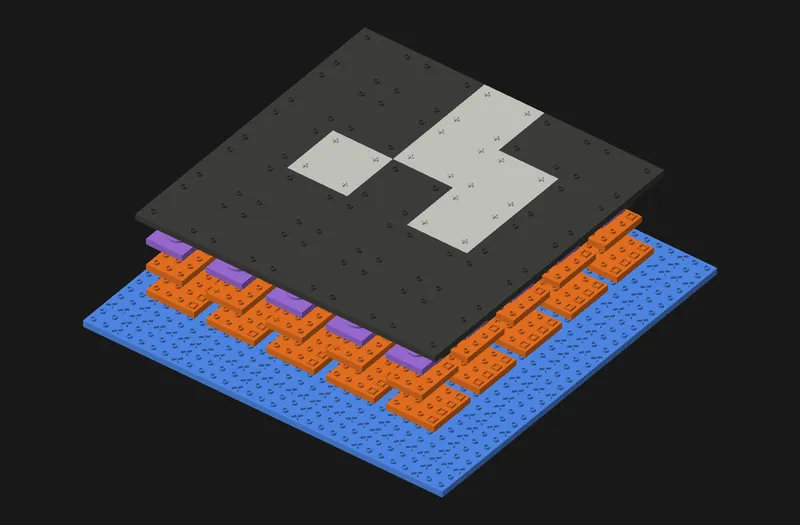
I later explored 3D tiles for Life’s evolution, where successive layers represent generations. Multilayer Mutilated Gear takes a different route through simulated mechanical logic. Both connect to my broader interest in physical computation.