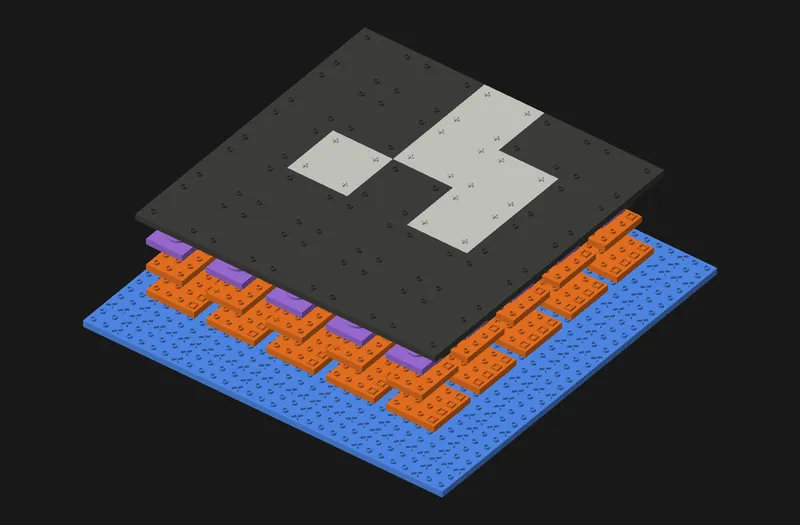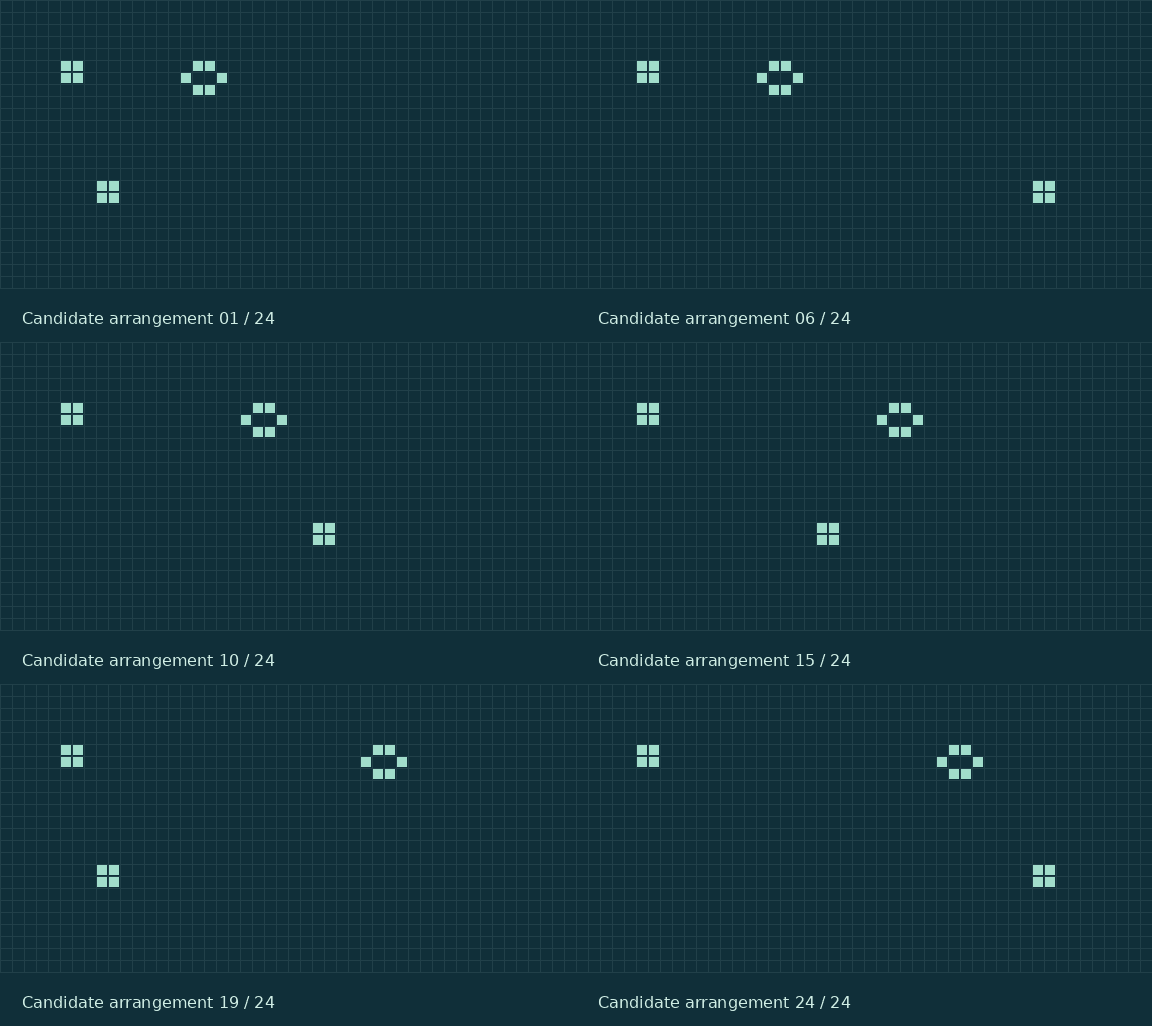
I wanted to explore a physical mechanism for Conway’s Game of Life. One inspiration was Paul Callahan’s still-life tiles: their connections encode constraints, so fitting the pieces together can enforce a valid Life still life.
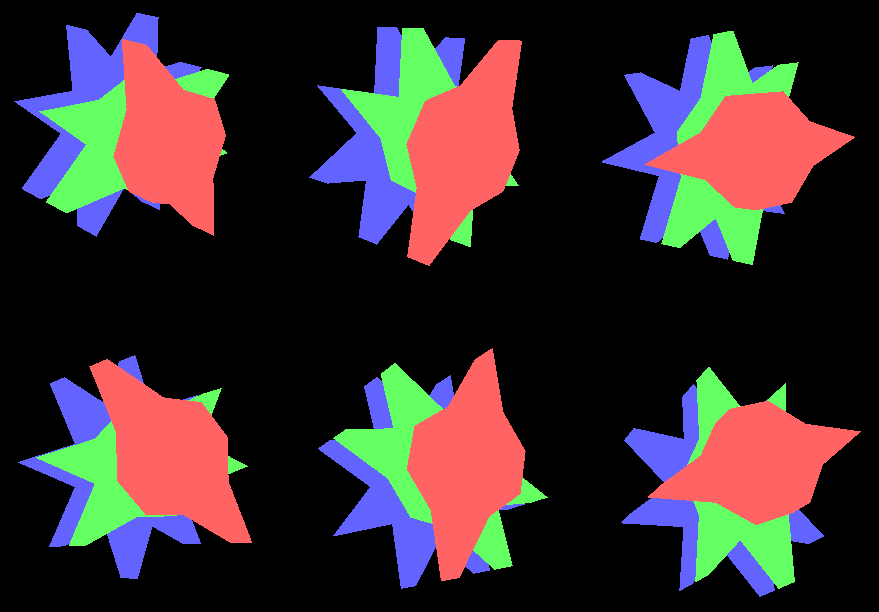
Physical computation and self-replication are recurring interests in my cellular-automaton work. MMG explores the computation side through a mechanical model: a mutilated gear has some teeth present and others missing, and layers of these gears can represent logic.
This project demonstrates simulated mechanisms. A self-replicating physical machine is a broader interest, not a result demonstrated by MMG.
The idea
Each layer can encode a different pattern of present and absent teeth. A grid of these components is intended to represent logic. The repository presents the mechanism through a simulation and animated examples.
The work is a software model of a mechanical idea. It does not establish that a physical machine has been fabricated or tested.
Implemented exploration tools
The README provides two Python entry points: main.py opens the user interface, and grid_editor.py opens the grid examples. The source includes the model and its visualization.
Demonstrated examples
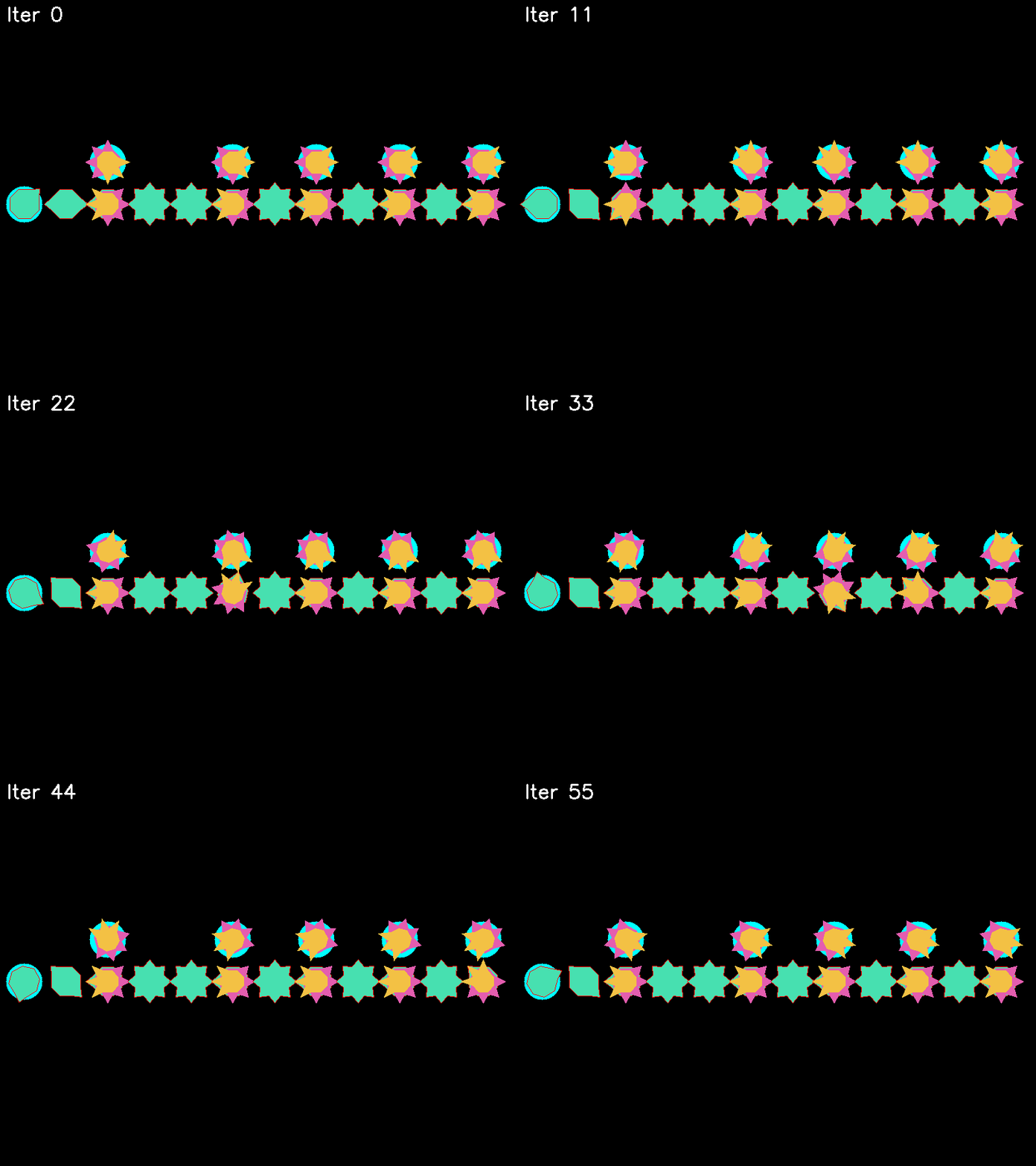
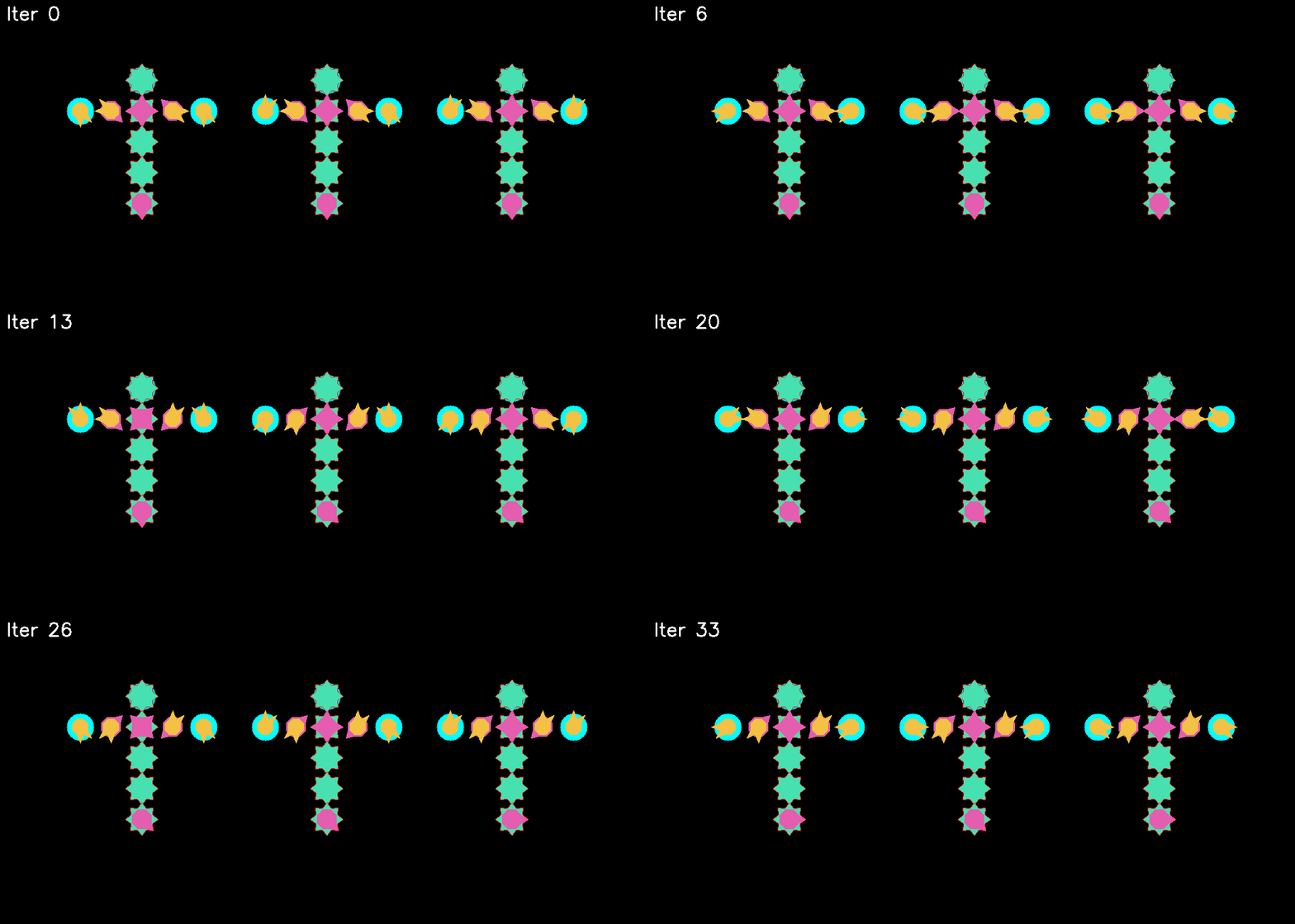
The repository supplies animations labeled Wire and OR Gates. They show the intended behavior of particular simulated configurations.
Developments in the forum
The forum record adds work beyond the short README. In July 2024 I reported a binary adder and a grid emulator, with full Life or Rule 110 logic still unfinished. The broader motivation was mechanical computation where electronics may be impractical.
In December 2024 I proposed independently rotating stages on each rod and a folding argument to trade width for depth. The stated transformation was
where is the number of stages. This is a proposed construction argument in the forum, not a measured physical build.
A February 2025 animation demonstrated a delayed wire, addressing the timing needed for logic gates. The March update added the grid UI/editor and OR-gate examples with different timing arrangements. These are simulation developments; a complete mechanical Life machine remained a goal.
Scope and next questions
These examples are a starting point for investigating information propagation and logic in the model. Physical tolerances, manufacturing, and measured hardware reliability are outside the demonstrated repository material.
Start with the documented Python interface and compare the grid arrangements with the animations. No performance or universality result is claimed here.
The earlier still-life tiles and 3D Life tiles explore another way of putting computation into physical constraints. Tiles encode compatible states; the gear project investigates timed mechanical interactions.